

𝐓𝐫𝐢𝐠𝐠𝐞𝐫𝐬 𝐢𝐧 𝐑𝐞𝐞𝐟 𝐓𝐚𝐧𝐤𝐬:
𝐅𝐫𝐢𝐞𝐧𝐝𝐬, 𝐅𝐨𝐞𝐬, 𝐨𝐫 𝐅𝐫𝐞𝐧𝐞𝐦𝐢𝐞𝐬?
As a reminder, I write these articles for fun and to help people learn and avoid the mistakes I made. If I missed something (I am certainly not perfect) let me know and I can add it to the article.
-Tamara
We've all been there, a Picasso trigger, darting around like it owns the place, full of swagger and personality. You think, Wow, that fish would be amazing in my reef tank. Then the doubts creep in. You’ve heard horror stories of triggers nipping at corals, rearranging rockwork, or turning your cleanup crew into a midnight snack. So what’s the truth? Can these charismatic fish really live in a reef tank, or are they ticking time bombs with fins? The answer: it depends on the species. Triggers aren’t one-size-fits-all. Some are notorious coral-crunchers, while others have a decent track record of behaving in mixed reef setups. Let’s break it down.
The “Safer” Triggerfish for Reefs
While often dubbed "reef-safe," a better term might be "reef-compatible with understanding." These triggers are generally smaller and less destructive, but their true success lies in their unique personalities. They are pelagic plankton-feeders by nature, which means they'd rather patrol the water column than pick apart your prized Acropora. But don't mistake "safer" for "boring."
1.Bluejaw (Blue Throat) Trigger (Xanthichthys auromarginatus):
Photo Credit: Quality Marine
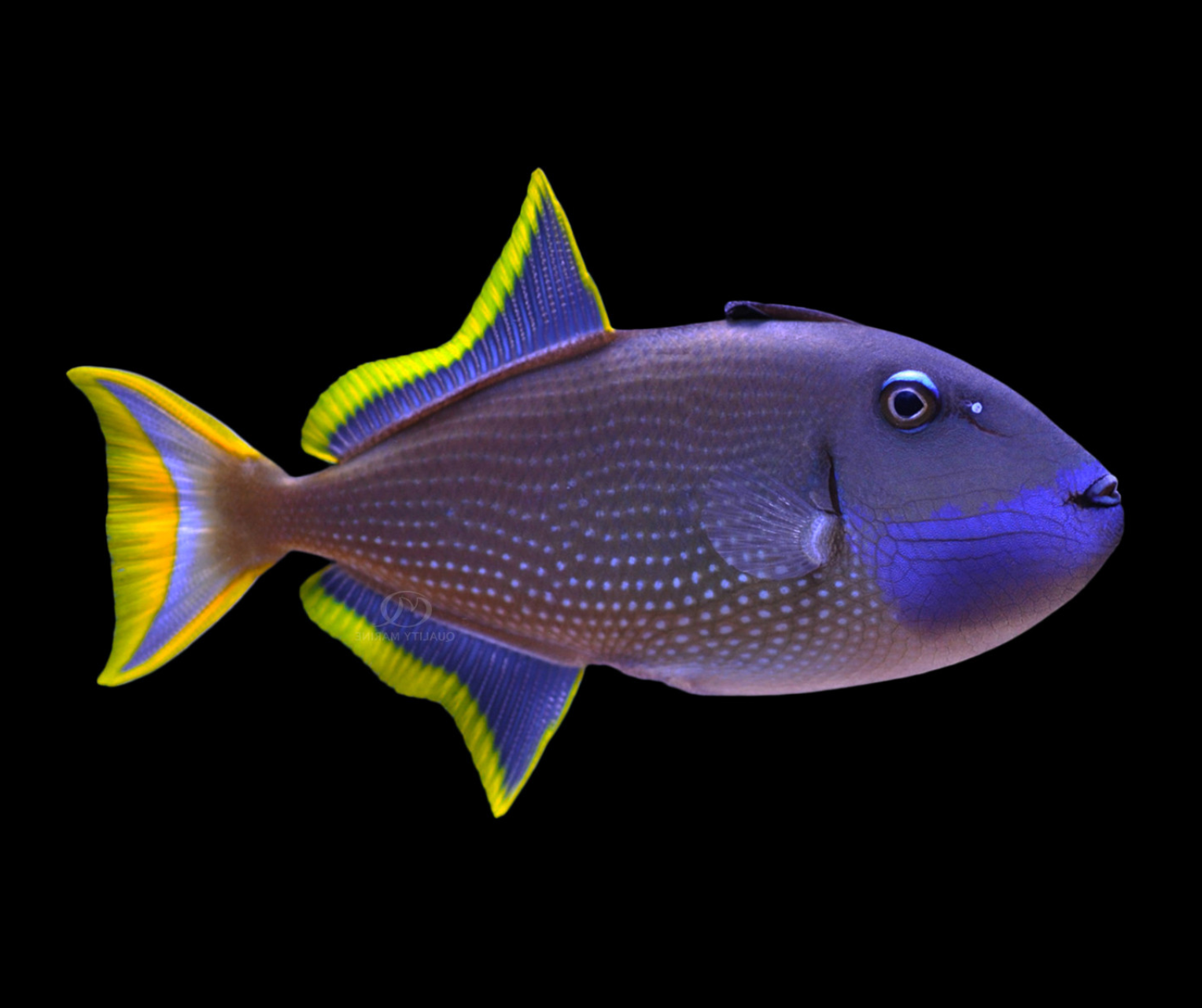
Peaceful by trigger standards, the Bluejaw is often considered the best candidate for a larger reef. Males sport a stunning electric-blue jawline and are remarkably mild-mannered. They tend to be more reclusive than other triggers, often hovering near their chosen cave or the tank's back corner. They're observers, not instigators. While they typically ignore corals, their planktonic diet means any small, shrimp-like creature (like ornamental shrimp or a prized 'pod population) might be seen as a passing snack. This is the trigger for the hobbyist who wants majestic beauty without the constant drama.
2. Sargassum Trigger (Xanthichthys ringens)
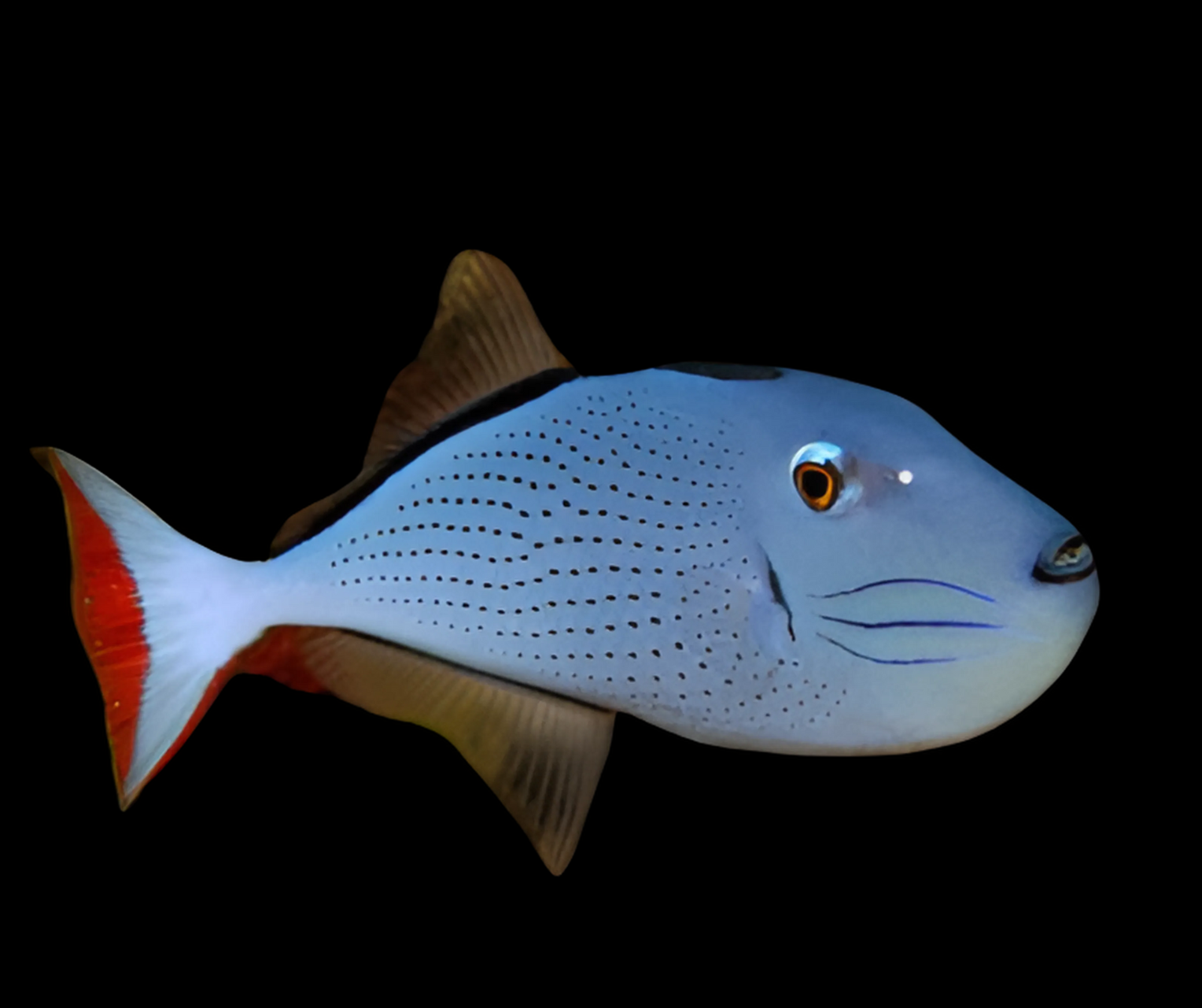
AKA the Red-Tail Trigger. Don't expect this fish to sit still. The Sargassum trigger is a constant, graceful swimmer, patrolling the mid-water and upper columns of the tank like a dedicated security guard. Its silvery body and elegant lines are a lesson in motion. This species is excellent for dynamic display tanks and is highly unlikely to bother any coral. Its "nippiness" is less about malice and more about opportunism; a slow-moving crab or snail that crosses its path might be investigated with a curious peck. It generally coexists well with other semi-aggressive fish, as it's too busy with its patrol duties to pick fights.
3. Pinktail Trigger (Melichthys vidua):
Photo Credit: Rock N Critters

The Pinktail is attractive and relatively mellow, but think of it as a clever, sometimes mischievous teenager. It's highly curious and will investigate every new addition to the tank—equipment, frags, your hand during maintenance. This is where the risk lies. While many leave corals entirely alone, some individuals just can't resist taking a "test bite" out of a fleshy LPS like a Hammer Coral or a clam's mantel. They're not out to destroy it; they're just seeing if it's food. This is a species where the keeper's diligence in providing a varied, meaty diet is paramount to keeping its curiosity in check.
4. Crosshatch Trigger (Xanthichthys mento)
Photo Credit: Bay Bridge Aquarium

The holy grail, and for good reason. The Crosshatch is not just beautiful and expensive; it's a truly regal fish. Males display a breathtaking cross-hatched pattern of red and blue lines. Their personality is one of confident calm rather than frantic energy. They are almost always coral-safe, but they come with two non-negotiable demands: space and flow. They need very large, mature systems with strong, turbulent water movement to truly thrive and display their natural, powerful swimming behavior. This is the trigger for the advanced hobbyist with the tank to match—a true crown jewel.
Tamara’s Pro Tip: Stick to species in the Xanthichthys and Melichthys genera for the best odds. Their wild diet of zooplankton in the water column makes them far less likely to graze on your coral or dismantle your rockwork than the rock-picking Balistapus or Balistoides species. Remember, a well-fed trigger is a well-behaved trigger!
The “With Caution” Group:
I decided to add this section to the article because so many people reached out with their stories of the perfectly behaved Niger Triggerfish 😀
These triggers live in the gray zone—the space between “Wow, they’re surprisingly polite!” and “Did they really just eat a $40 hermit crab like a potato chip?” They aren’t the marauding, coral-shredding wrecking balls of the truly high-risk group, but they also aren’t the model citizens of the Genus Xanthichthys. Instead, think of them as the charismatic friends who mean well but occasionally make choices that require you to take a deep breath.
Their behavior is driven by curiosity, opportunistic feeding, and a naturally investigative nature. They explore with their mouths, test boundaries, and take advantage of slow-moving or unprotected invertebrates. In a large tank with stable rockwork and corals that are either small-polyped or well-established, they can coexist peacefully for years. But put a fleshy LPS, ornamental shrimp, or delicately stacked aquascape in front of them, and the temptation may be too much to resist.
These triggers are best suited for experienced reef keepers who understand both the risks and rewards. With thoughtful planning, regular feeding, and a willingness to accept the occasional casualty, they can be incredible additions that bring motion, personality, and intelligence to a reef. But make no mistake—success with these species is earned through vigilance, not luck.
1. Black Triggerfish (Melichthys niger)
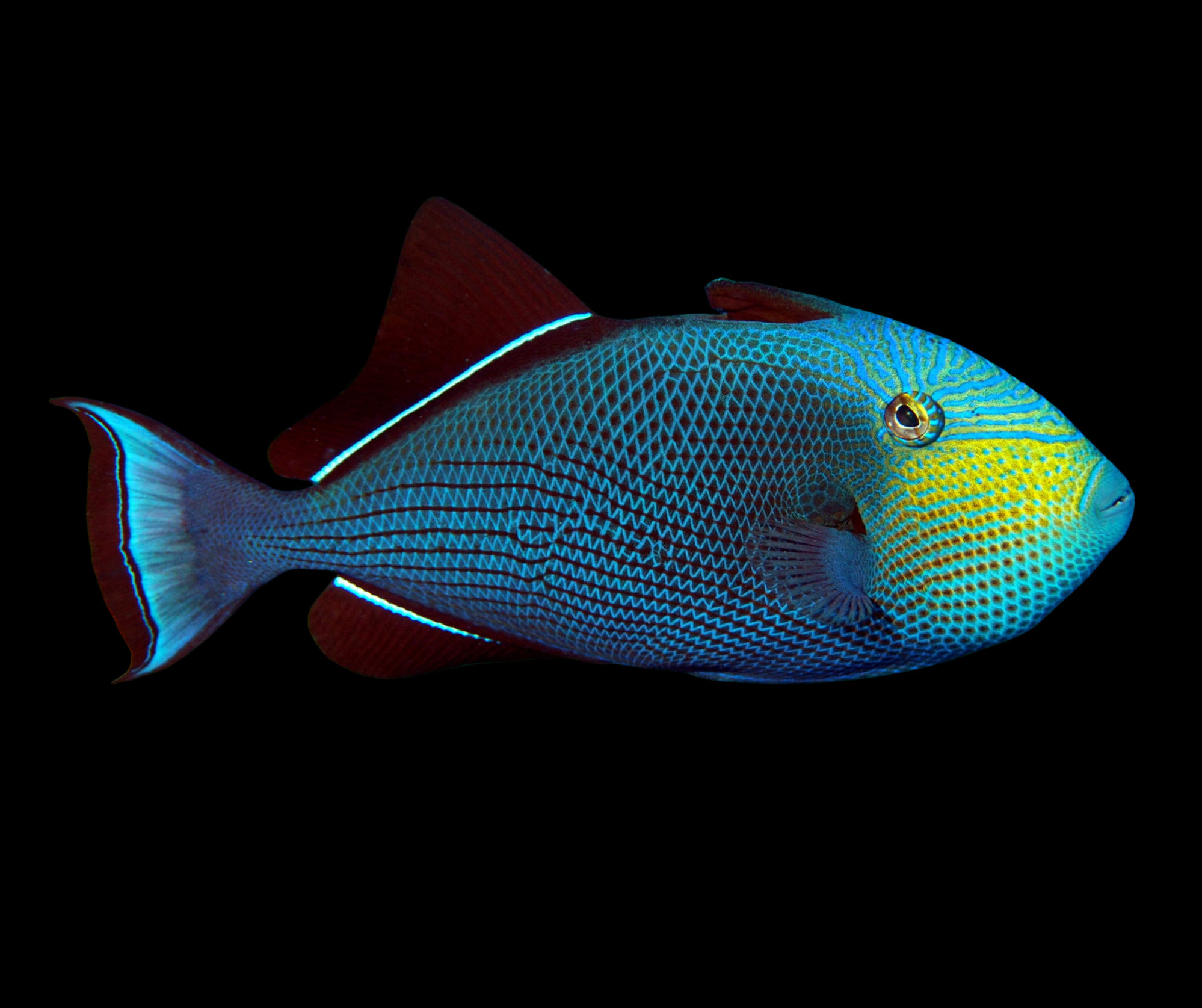
AKA the Black Durgon is a bold, intelligent swimmer that moves with purpose. It’s curious to a fault, circling rocks and coral heads like a detective looking for clues. Most of the time, it ignores corals completely—but a particularly fleshy LPS may get an investigative nibble. Its true mischief comes out around invertebrates: snails and shrimp are unlikely to pass its “can I eat this?” test. It thrives in large reefs with fast, assertive tank mates that won’t be intimidated by its investigative nature. This fish brings motion, charisma, and a hint of unpredictability to any system that can accommodate its personality.
2. Niger Triggerfish (Odonus niger):
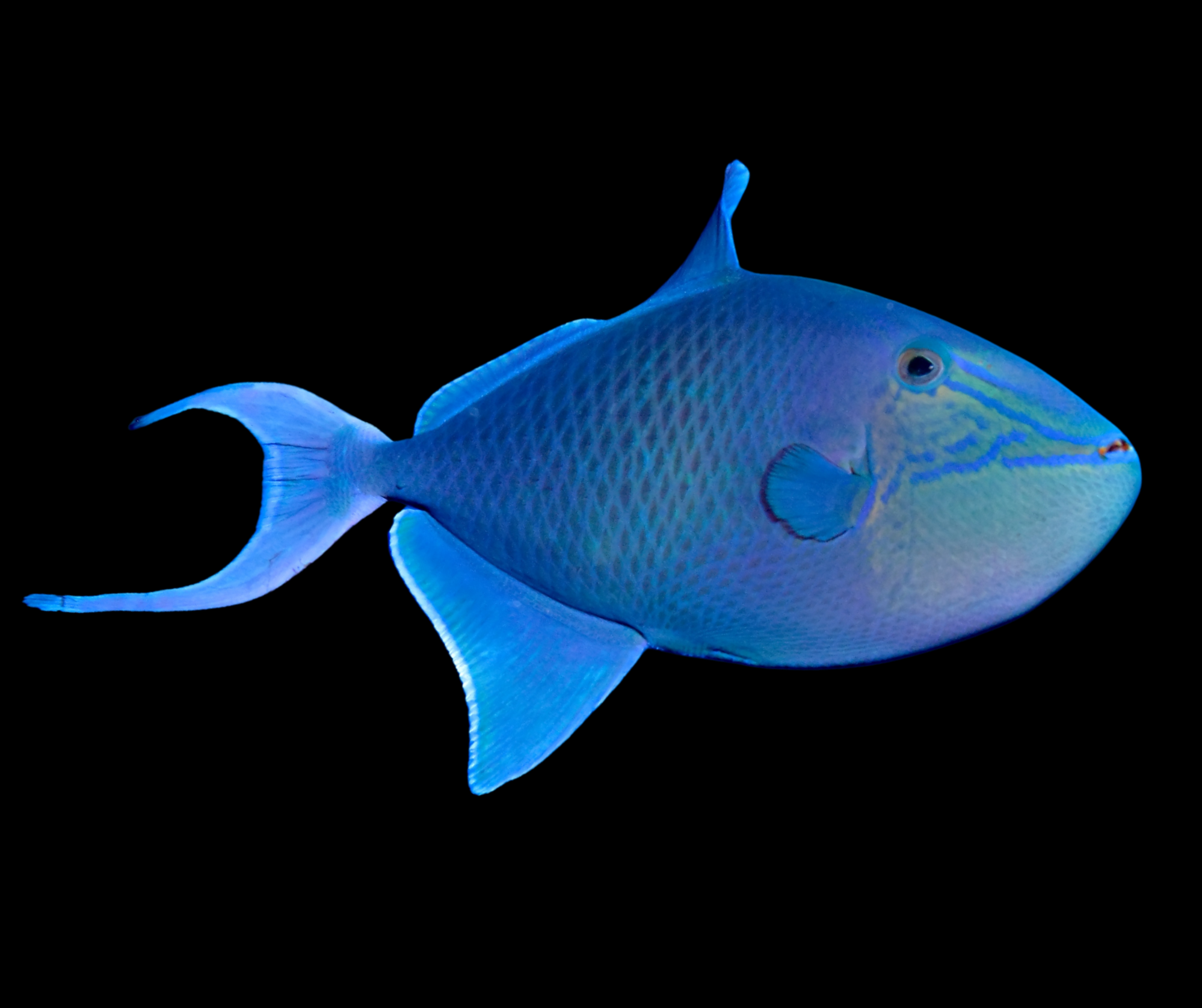
AKA the vampire triggerfish (due to its red teeth) or Red-toothed Triggerfish. The Niger Triggerfish is the ocean’s definition of duality. One moment, it’s a gentle, effortless glider; the next, it’s darting across the tank like it just remembered it left the stove on. Most Nigers ignore corals completely and prefer to hover in open water, watching the tank like a sentinel. But make no mistake—anything slow, crunchy, or small enough to fit in its mouth should not expect mercy. Shrimp, tiny snails, and dainty hermits are often treated as appetizers. As they mature, Nigers grow more assertive and may start “supervising” other fish a little too enthusiastically. In a big, bold reef, however, they’re dramatic centerpieces that rarely cause problems for corals.
The “High-Risk” Group: The Architects of Chaos
These triggers are best admired in fish-only tanks or massive public aquariums. They are not just "aggressive"; they are intelligent, powerful, and possess instincts that are fundamentally incompatible with a delicate reef ecosystem. Their personalities are larger than life, and so is their capacity for destruction.
1. Clown Trigger (Balistoides conspicillum)

Gorgeous but highly aggressive, the Clown trigger is the ultimate test of a hobbyist's willpower. As a juvenile, it's often shy and may even seem manageable. This is a trap. As it matures, it almost invariably transforms into a territorial tyrant. It's not just about eating your inverts; it's about dominating the entire tank. It will relentlessly harass tankmates to the point of exhaustion and death, and its powerful jaws can reduce your aquascape to rubble. This fish doesn't just cause problems; it is the problem.
2. Undulate Trigger (Balistapus undulatus):

If there were a prison for fish, the Undulate trigger would be on death row. Calling them "mean as they come" is an understatement. They are pure, concentrated aggression in a beautifully patterned package. They are known to attack fish much larger than themselves, often with fatal results. They are fin-nippers, invert-crunchers, and coral-shredders. They are not a community fish by any stretch of the imagination and are best kept alone in a species-specific tank labeled "Here Be Dragons."
3. Queen, Titan, and Blueline Triggers (Balistes vetula, Balistoides viridescens, Pseudobalistes fuscus)

Strikingly beautiful and growing very large, the Queen trigger carries itself with an air of royalty—and you are merely a subject in its domain. It's not just aggressive; it's highly intelligent and curious in the most destructive way. It will methodically test every coral, move every loose frag, and dismantle your aquascape not out of panic, but out of a calculated desire to rearrange its territory. Its size and power mean it can do in an afternoon what other fish would take weeks to accomplish.
4. Picasso Trigger (Rhinecanthus aculeatus, R. assasi):
Photo Credit: Bay Bright Aquarium

The classic "not reef safe" trigger. The Picasso isn't always overtly murderous like the Undulate; its charm is its mischievous, busy nature. It loves rearranging tanks, biting equipment (watch out for heater cords and wave-maker guards!), and "sampling" anything fleshy. It views your entire tank as its personal workshop and buffet. It's full of personality and swagger, but that personality is that of a brilliant, destructive toddler with a set of bolt cutters on its face. It will turn your meticulously crafted reef into a sand-floored construction site.
Tamara’s Final Pro Tip: If you aren't sure look at their jaw structure. If they look like they have an underbite, they are usually consider more reef-safe as they are more plankton eaters. If their teeth come together and they face looks more like a triangle, they are designed to bite and crish things. Your coral and cleanup crew are not just at risk; they are doomed.
5. Bursa Triggerfish (Rhinecanthus verrucosus, R. rectangulus, and relatives)

The Bursa family is unpredictable by design. These triggers are tactile, interactive, and always testing the environment with their mouths. They explore rockwork like they’re auditioning for a reef demolition crew, moving rubble, digging, and dislodging anything not firmly glued down. Corals may survive long-term—especially hardy SPS—but there’s no guarantee. Snails and shrimp are treated as mobile snacks and won’t last long. These fish shine in rugged, high-energy setups where their natural behaviors become part of the tank’s rhythm. For the right aquarist, their intelligence and personality are irresistible.
Tank Requirements for Triggers
Getting the tank environment right for a trigger isn't just about keeping it alive—it's about managing its behavior. A bored or cramped trigger is a destructive one. Think of their home not as a decorative display, but as a high-security playground designed for a clever, powerful inmate.
1. Size Matters: It's Not a Suggestion, It's a Sanity Saver
That "reef-safe" Bluejaw trigger might be peaceful, but it's not a small fish. Sticking one in an undersized tank is like locking a hyperactive teenager in a broom closet and being surprised when they start bouncing off the walls. Most triggers are pelagic cruisers; they are built for open water and constant motion.
A "reef-safe" Bluejaw still needs at least a 125-gallon tank not just for swimming, but for its own mental well-being and to disperse its territorial attitude. And the majestic Crosshatch? Forget a standard large tank. They require a 300+ gallon system, often with dimensions better suited to a public display. This isn't for show; it's to accommodate their powerful swimming and provide the intense, turbulent flow they thrive in. Skimp on size, and you're not just stunting their growth; you're fueling their inner demolition expert.
2. Rockwork & Flow: Fortress Engineering 101
Your aquascape isn't a piece of art; it's a fortress you're building against a brilliant, toothy opponent. They need caves and bolt-holes to feel secure—a trigger without a home base is a nervous, erratic fish. But they also need wide-open swimming lanes to patrol.
The golden rule: If it isn't glued, it's gone. Your beautiful, carefully balanced rock spire? They'll see it as a challenge. They are notorious diggers, undermining rock foundations until the entire structure comes crashing down. You must build from the bottom up, using acrylic rods and a small mountain of aquarium epoxy. Every rock that can be wobbled will be toppled. This is one of the few areas of the hobby where you can't be too paranoid.
3. Diet: More Than Just Feeding, It's Behavioral Management
These aren't grazers; they're omnivorous carnivores with the appetite of a teenage boy and the table manners of a wolverine. A diet of generic flakes will lead to a nutritional deficit and a very bored fish—and a bored trigger starts looking for "alternative entertainment" (i.e., your shrimp and corals).
Feed a varied, meaty diet: clams on the half-shell, whole shrimp, squid, and high-quality pellets. But here's the kicker everyone forgets: their teeth never stop growing. In the wild, they're constantly crunching on hard-shelled crabs and urchins. In your tank, you must provide this. Offering live or frozen krill with the shell on, whole mussels, or even dropping in a small, clean crab leg gives them the dental work they desperately need and provides mental stimulation for hours. It's a pacifier and a toothbrush in one.
Tamara’s Pro Tip: The single most important rule of triggerfish ownership: A hungry trigger is a naughty trigger. They are opportunistic feeders with a fast metabolism. Keeping them well-fed with a diverse menu is your number one defense against bad behavior. A trigger that's contentedly working on a clam is a trigger that isn't redecorating your aquascape or taste-testing your $200 Acan lord. Think of it as a bribe, and make it a good one.
Behavior in the Reef
So, you've decided to roll the dice on a "reef-safe-ish" trigger. Buckle up. Living with one of these charismatic clowns is like having a brilliant, mischievous toddler with a toolbelt. They're not just fish; they're personalities with fins, and their behavior in a reef setting is a constant lesson in managed chaos.
1. The Cleanup Crew Conundrum: A Buffet by Appointment
Let's be blunt: your cleanup crew is living on borrowed time. The relationship between a trigger and your CUC isn't a matter of if, but when and how interested. It’s a spectrum of risk. A Bluejaw might completely ignore your turbo snails for years, only to suddenly develop a taste for them one Tuesday. A Pinktail might see your prized Blood Red Fire Shrimp not as a tankmate, but as a $60 canapé.
Think of it this way: you're not stocking a cleanup crew; you're providing a supplemental, self-replenishing larder. Some triggers will graze passively, keeping the population in check. Others will conduct a systematic genocide. Your best bet is to introduce the trigger to a tank that already has an established, reproducing population of micro-fauna (like copepods). This gives them a "default" snack that can help spare your showpiece inverts.
2. The "Reef-Safe" Illusion: They're Rearrangers, Not Eaters
The term "reef-safe" is a promise these fish love to break, but not in the way you might think. The "safer" species genuinely aren't interested in eating your coral tissue. The real danger isn't their mouth—it's their attitude.
They are the interior decorators of the aquarium world, and they have a burning passion for "open concept" layouts. That frag you spent weeks positioning perfectly? It's now a sandbed specimen. That arch you meticulously glued? They'll decide it looks better as a pile of rubble. They dig, they shove, they rearrange. It’s not malice; it’s instinct. They're ensuring their bolt-holes are clear and their territory is to their liking. The solution? Epoxy. Lots and lots of epoxy. Every frag must be cemented in place like the Crown Jewels.
3. Tankmate Tango: Choosing the Right Dance Partners
Triggers are the semi-aggressive bullies of the schoolyard—they respect confidence and will prey on timidity. Coexisting with tangs, wrasses, and angelfish often works because these fish are fast, bold, and can hold their own. They speak the same language of posturing and quick getaways.
The fish you need to worry about are the wallflowers. A timid Fairy Wrasse, a delicate Mandarin, or a slow-moving Clown Goby doesn't stand a chance. The constant harassment from a curious, pushy trigger will stress them to the point of starvation or illness. The golden rule: if a fish looks like it could be spooked, it will be. If it looks like a snack, it will be. Your community should be built of fish with backbone, or your trigger will become the tyrannical center of the universe.
The Bottom Line: Adding a trigger means accepting a certain level of beautiful, controlled anarchy. You're trading a perfectly pristine, predictable reef for a dynamic, living ecosystem with a bossy, four-inch-long foreman in charge. It’s not for the control freak, but for those who embrace it, the personality and spectacle are utterly unmatched.
The Hobbyist’s Dilemma: Worth the Risk?
So, should you add a trigger to your reef tank? Ask yourself:
1.Do you have a large enough system to house one long-term?
2.Can you accept losing the occasional invert?
3.Are you willing to roll the dice on an individual’s personality?
If yes, a bluejaw, sargassum, or crosshatch trigger could be your showpiece fish. If no, admire the riskier species from afar and keep your reef drama-free.
Conclusion
Triggerfish are some of the most engaging, intelligent fish in the hobby—but they come with baggage. The key is species selection and realistic expectations. With the right trigger, you can enjoy that bold personality without sacrificing your reef. With the wrong one, you’ll be fishing frags out of the sand and wondering why your shrimp population mysteriously vanished.


