


Leopard Wrasses: How to Successfully Keep and Feed Them Long-Term
Published January 16, 2026 • 14 min read
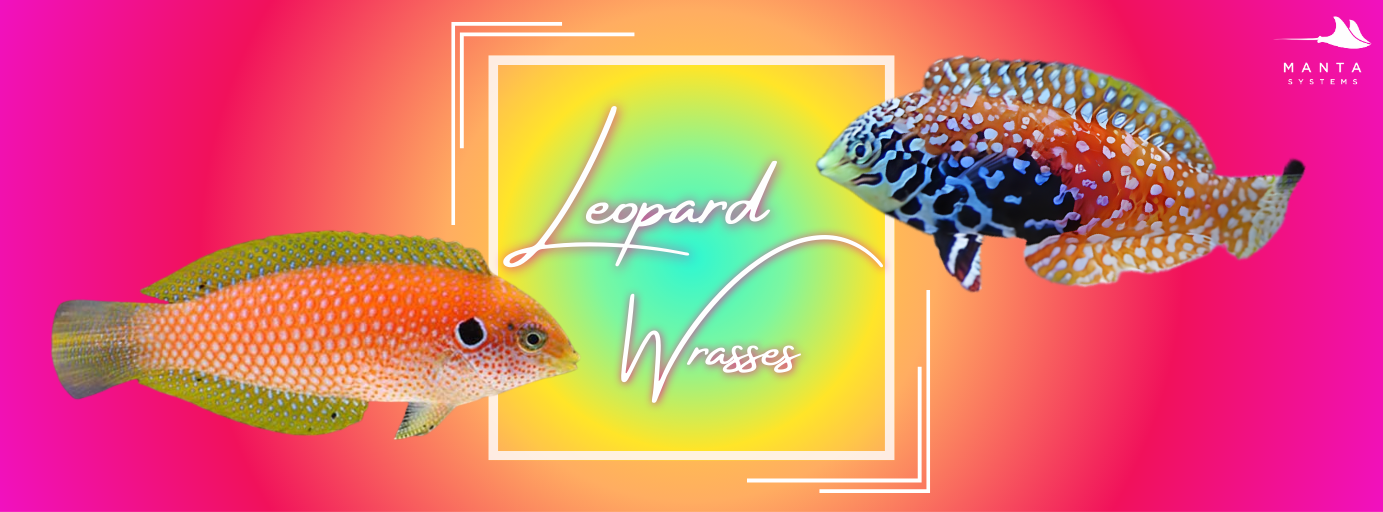
Leopard Wrasses: How to Successfully Keep and Feed Them Long-Term
As a reminder, I write these articles for fun and to help people learn and avoid the mistakes I made. If I missed something (I am certainly not perfect) let me know and I can add it to the article.
-Tamara
Let's start with the uncomfortable truth. Leopard wrasses can be very difficult. That breathtaking, polka-dotted fish you're admiring doesn't just die from bad luck. It slowly, methodically exposes every small flaw in your system, your sourcing, and your routine. You can have "perfect" water parameters and still watch it fade away. This happens because we treat them like any other fish, and they are anything but.
This isn't a care sheet. It's a diagnostic manual and a strategic blueprint. We're going to dissect the three fatal mistakes that kill the majority of these fish and build, piece by piece, the system that lets them not just survive, but thrive. If you're ready to move from a hobbyist who keeps fish to one who truly understands them, this is your guide.
Three Fatal Mistakes (And How to Avoid Them)
Before we talk about success, we must understand failure. These are the silent killers.
1. The Wrong Acquisition
You fall in love with a beautiful fish you just have to have—but it might not actually be the best choice for your tank. At the store, the fish is listed as “eating” (maybe it pecked at a rock once), and it looks fine. But unfortunately, hobbyists often end up purchasing what I call a “ghost fish”—an animal already so stressed and depleted from its journey that it’s on a slow, predetermined path. You’re simply providing the final tank.
It’s a sad reality in this hobby: some fish reach a point where their chance of survival is low—not because of the species itself, but because of the individual fish’s journey. The damage was done long before it reached you.
The Fix: You don't buy just any fish. You seek out a survivor. You must witness it aggressively eat prepared foods—frozen mysis, brine shrimp—right in front of you. Not picking at the water column, but target feeding. Better yet, if the store will let you, pay for it and have them hold it for 10-14 days. If it's still fat and eating after that, you have a candidate.
2. The Inadequate Foraging Environment
Sometimes as hobbyist's we give our fish a tank, without remembering they need an entire ecosystem. A sterile sand bed and a few pieces of clean rock are a food desert to an obligate micropredator. Their instinct is to graze, constantly, on tiny life. No life means a slow, inevitable starvation, no matter how much mysis you blast into the water.
The Fix: You must build a self-sustaining food web. This is non-negotiable. Your sand must be alive. Your rock must be a pod metropolis. This isn't about decoration; it's about infrastructure that allows a healthy pod population.
3. The Inflexible Feeding Strategy
Leopard wrasses have a high metabolic rate and a digestive system evolved for grazing. To replicate this in captivity, they must be fed small portions multiple times per day with a rotating menu of meaty frozen foods. Feeding the same single item—even twice daily—fails to meet their nutritional needs and can lead to deficiencies.
The Fix: You implement a layered feeding strategy. Live food to initiate, frozen food to sustain, and a cultivated pod population to provide 24/7 psychological and nutritional enrichment. You feed the tank, not just the fish.
Wrasse-Readiness Assessment
Before you even look at a fish, audit your system. Use this checklist.
1. The Substrate: The Foundation of Life
Leopard wrasses are obligate psammophiles (sand-lovers). The substrate is not decorative; it's a critical life-support system that must meet three non-negotiable criteria: Type, Depth, and Function.
Type: The Right Grain
Substrate choice is critical. A fine, oolitic "sugar" sand best mimics their natural habitat, forming a soft, pliable bed for safe, stress-free burrowing at night. The maximum grain size to consider is approximately 1.5mm; a product like CaribSea's Fiji Pink sand (0.5-1.5mm) is at the absolute upper limit of acceptability. Coarser, crushed coral substrates can abrade scales and fins, cause stress, and ultimately inhibit this essential nocturnal behavior, leading to failure.
Depth: A True 3-Inch Minimum
This is not a suggestion—it's a requirement. A minimum 3-inch (7.5 cm) deep bed must be maintained across the entire tank footprint. Shallow beds do not provide the security or the consistent, cool environment the wrasses need for complete burial. This depth also creates the necessary volume to support the next critical component: a living microfauna population.
Function: A Living, Mature Biome
The sand bed must be mature and functional. A sterile bag of sand is useless. A proper bed is a living larder, housing countless copepods, amphipods, micro-worms, and beneficial bacteria. This "live sand" function serves two vital purposes:
-
Sustained Foraging: It provides a continuous, natural food source for the wrasse to graze upon between feedings.
-
Biological Stability: It contributes significantly to the tank's nitrogen cycle, processing waste.
Ask yourself: Is my sand bed mature (6+ months old)? Does it visibly swarm with life at night? If the answer is no, the tank is not ready for a leopard wrasse.
2. The Aquascape: The Pod Production Facility
Recreate their natural hunting ground. A "reef flat" layout is ideal, consisting of expansive open sand in the front and center of the tank, with rock structures consolidated onto the sides and back. This provides two critical zones:
-
Primary Foraging Zone: A large, unobstructed sand bed for methodical grazing.
-
Refuge & Pod Production Zone: Rockwork that creates territories, hiding places, and the maximum surface area for microfauna.
Rock Quality: The Pod Production Complex
The rockwork is not just decoration—it is the essential infrastructure for your food culture. Use porous, mature live rock that has been curing in a healthy system for months. This rock is the "apartment complex" for your copepod and amphipod populations, providing endless nooks for breeding and shelter. Sterile or non-porous rock will not support the necessary biomass.
Flow: Curated Current for Hunters
Leopard wrasses are capable swimmers but methodical hunters. They forage by carefully inspecting the substrate and rockwork, not by chasing food in strong currents.
-
In Hunting Zones: Provide low-to-moderate laminar or gentle gyre flow across the open sand and lower rock faces. This allows them to work without fighting turbulence.
-
Avoid: Direct, high-velocity powerheads or chaotic flow patterns aimed at their primary grazing areas. They will avoid these zones, which can lead to stress and reduced feeding.
3. The Life-Support: The Food Bank
Refugium: The Non-Optional Food Factory
This is not an optional upgrade. A refugium, whether a separate sump chamber or a connected display, is your dedicated culture tank for sustaining populations of live copepods (e.g., Tisbe and Tigger pods). To maximize production and provide a nocturnal food source, illuminate the refugium on a reverse photoperiod (lights on when the display lights are off). This stabilizes pH and ensures a steady swarm of pods enters the display at night, precisely when leopard wrasses may forage.
Auto Feeder: The Metabolic Safety Net
Leopard wrasses have relentless metabolisms. While they primarily hunt live and frozen foods, supplementing with an auto feeder dispensing small amounts of high-quality, fine-pelleted food 2-3 times daily provides a crucial calorie base. This ensures they have constant access to nutrition, even when you're not there to feed frozen, and helps sustain them in between pod-hunting sessions. Ask yourself: Can my system and schedule provide this consistent baseline feeding?
Quarantine Protocol: The Sand-Bed Sanctuary
Standard bare-bottom quarantine is psychologically and physically damaging to these fish. Your quarantine tank (QT) must include a small dish or section of the same fine sand used in your display. This provides an essential refuge for burrowing, drastically reduces stress, and can be the difference between a fish that begins eating and one that perishes from shock. A stressed fish in a bare tank will often refuse treatment; a secure fish in a proper QT has a fighting chance. Never skip this step.
If you can't say yes to all of these, stop. Your tank isn't quite ready. Go back and build the environment first.
The Acquisition Protocol – How to Source a Survivor
This is the most critical skill you will learn. You are a surgeon selecting a patient for a difficult operation. You need the strongest candidate.
The In-Store Questions:
-
Ask for the Arrival Date. If it came in less than a week ago, walk away. No exceptions.
-
Ask for a Live Feeding Demo. Live food is good but frozen fiid is much much better. Watch closely. Does it chase the food? Swallow it with purpose? Or just glance at it?
-
Assess Body Condition. Look for a plump belly, especially behind the pectoral fins. A pinched or concave profile is a red flag.
-
The Hold Request. "I'd like to purchase this fish and have you hold it for me for 10 days." A store that balks at this is not a store you want to buy a leopard wrasse from.
The Layered Feeding Strategy
Here is my method for feeding. It's a pyramid. Think of these percentages as behavioral reliance, not a precise nutritional formula.
Layer 1: The Base – The Cultured Pod Population (60% of Diet)
Advanced Refugium Strategy:
The goal is to create a complex 3D habitat, not just nutrient export. While Chaeto is effective for nitrate/phosphate reduction, it offers a relatively simple structure.
To truly supercharge pod production, use a diverse macroalgae "forest":
-
Ulva (Sea Lettuce): Provides broad, smooth surfaces for grazing and biofilm.
-
Gracilaria & Other Bushy Reds: Offers dense, intricate branches perfect for juvenile pods to hide and breed.
This diversity of form and texture creates more niches, leading to a larger, more resilient, and more visible pod population that will continuously seed your display.
Layer 2: The Middle – Enriched Frozen Feeds (30% of Diet)
This is your daily targeted nutrition that should be fed 2-3 times per day.
-
The Recipe: Thaw a mixture of different foods throughout the day. Try mysis, enriched brine shrimp, roe, calanus, and any other food that you like that has a similar particle size.
-
Delivery: Use a turkey baster or a long pipette. Turn off pumps. Place the food directly in their path on the sand until they are seeking out food and eating gusto. Train them to associate you with food.
Layer 3: The Top – High-Quality Prepared Pellets (10% of Diet)
This is maintenance calories and convenience.
-
Tools: The next-best tool is an automatic pellet feeder. While we can't yet automate their ideal diet of frozen foods yet (I'm working on it! 😉), programming 2-3 daily micro-feedings of high-quality pellets ensures they have a constant calorie and nutritional base between our hands-on feedings.
-
Food: Small-grain, sinking pellets (e.g., TDO Chroma Boost) and high-quality flake.
-
Schedule: 2-3 tiny pinches per day, dispensed when you're not there.
Species Selection
The "leopard wrasse" is a family. Your choice of which member to invite home dictates your difficulty level.

| Common Name | Scientific Name | Primary Challenge | #1 Success Factor | Recommended Tank & Keeper Profile |
|---|---|---|---|---|
| Black Leopard | Macropharyngodon negrosensis | Overcoming post-shipping shyness and initiating feeding. | Observed, consistent feeding on frozen foods (mysis, brine) before purchase. | A mature, peaceful reef (75+ gal). The dedicated beginner ready for their first leopard wrasse. |
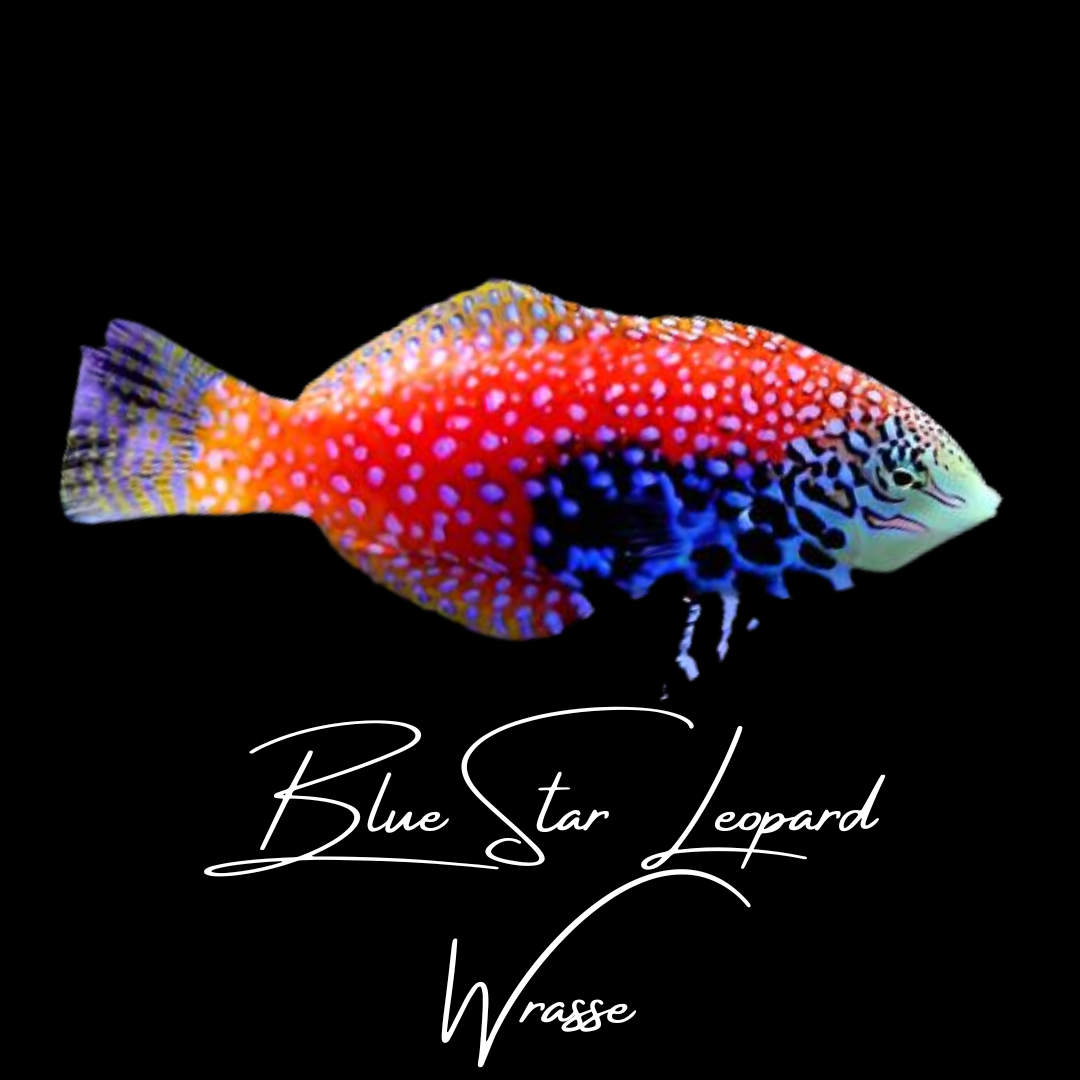
| Blue Star Leopard | Macropharyngodon bipartitus | Extremely high metabolism; can starve in a pod-poor tank. | A mature refugium that produces a visible nightly swarm of copepods/amphipods. | A nutrient-rich, established system (1+ year old, 100+ gal) focused on pod cultivation. Intermediate keeper. |
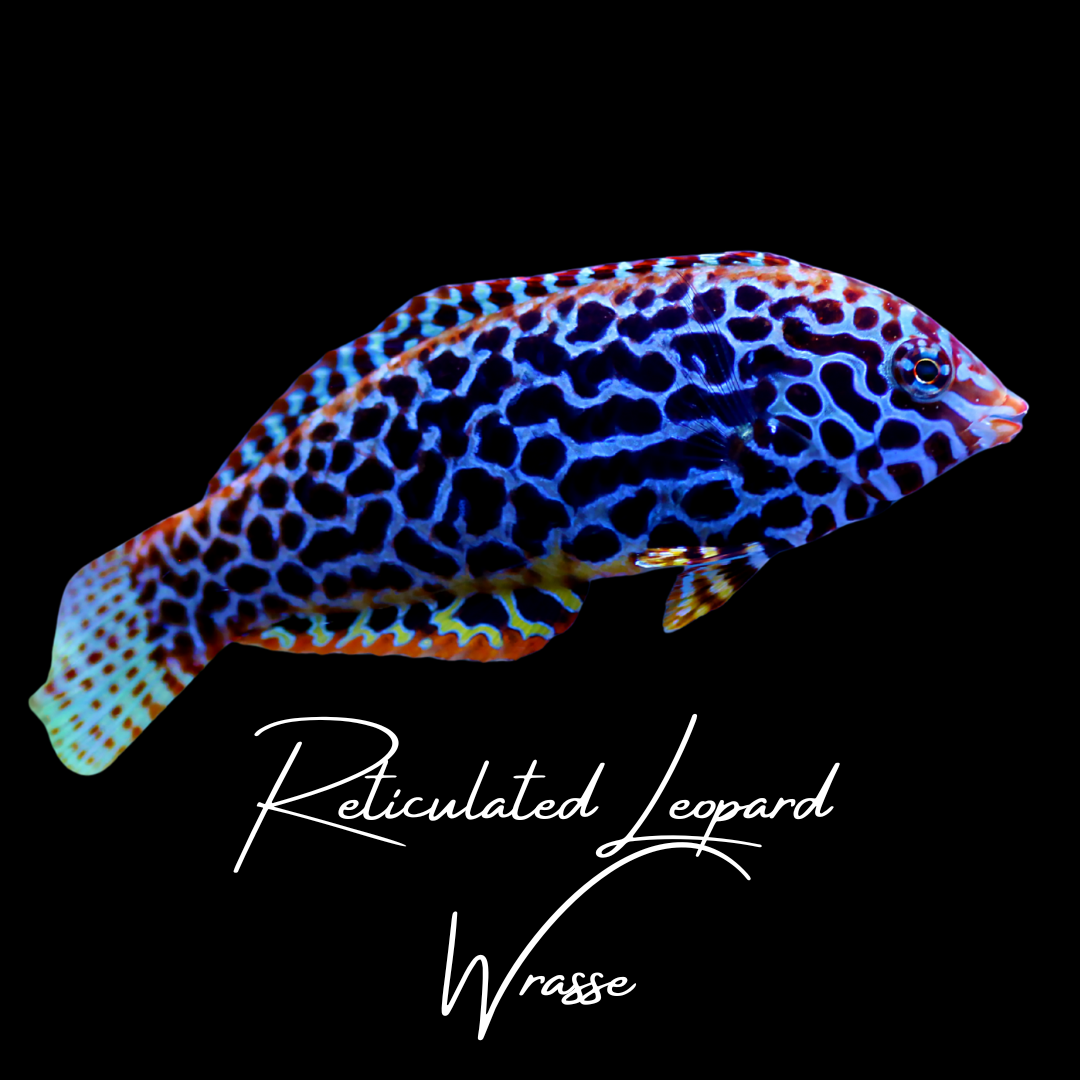
| Reticulated Leopard | Macropharyngodon meleagris | Intense male territoriality; severe intra-species aggression. | One male per tank. Never house two males. Best as a single specimen or a confirmed male-female pair in very large tanks (180+ gal). | A large "community roommate" tank. The hobbyist seeking a single, stunning centerpiece wrasse. |
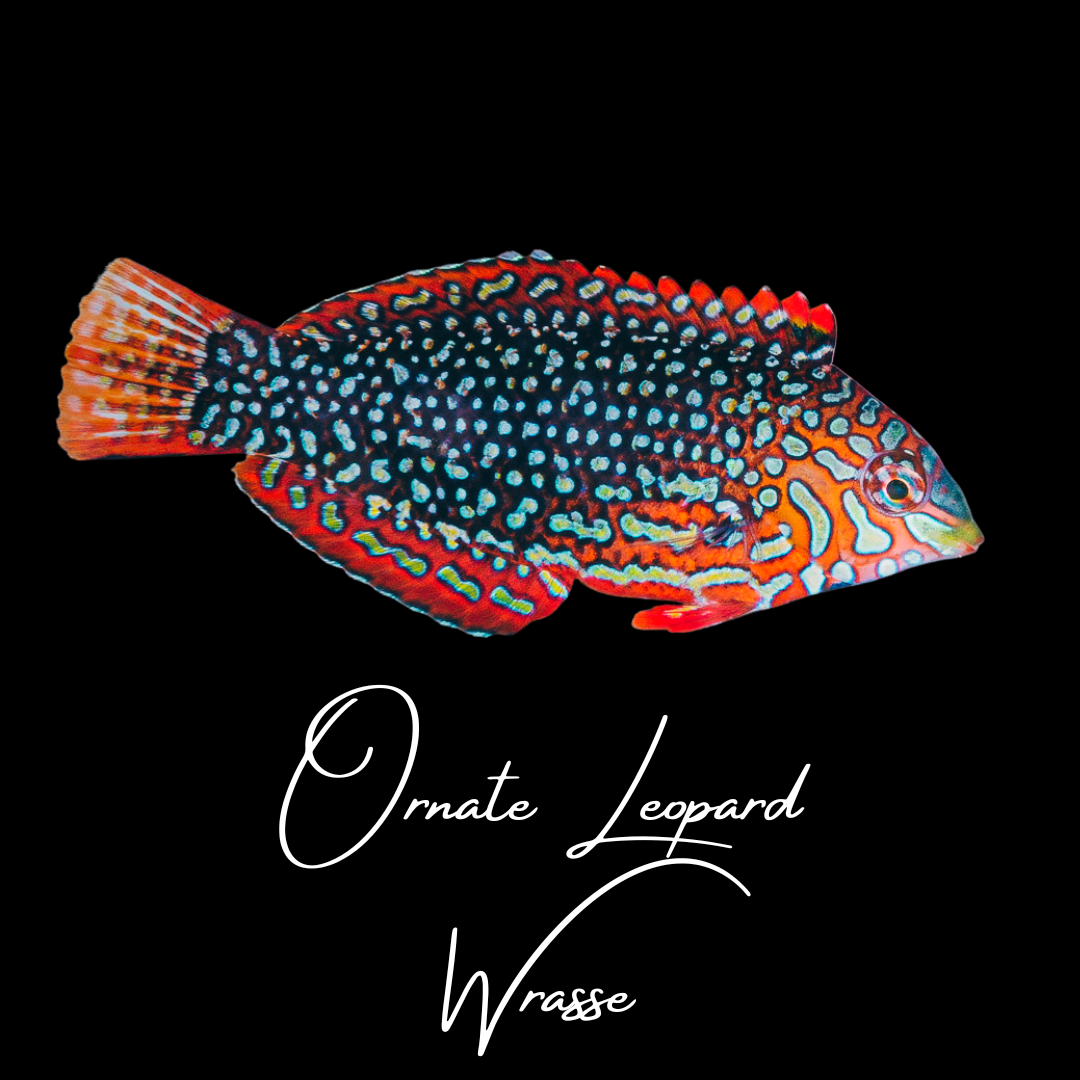
| Ornate Leopard | Macropharyngodon ornatus | Pathological reclusiveness; will hide and refuse to eat if stressed. | An aquascape with abundant dark overhangs, caves, and zero food competition. Often thrives in species-only or "pod hotel" setups. | A dedicated, low-traffic tank (75+ gal) with cryptic rockwork. The expert keeper prioritizing low-stress environments. |
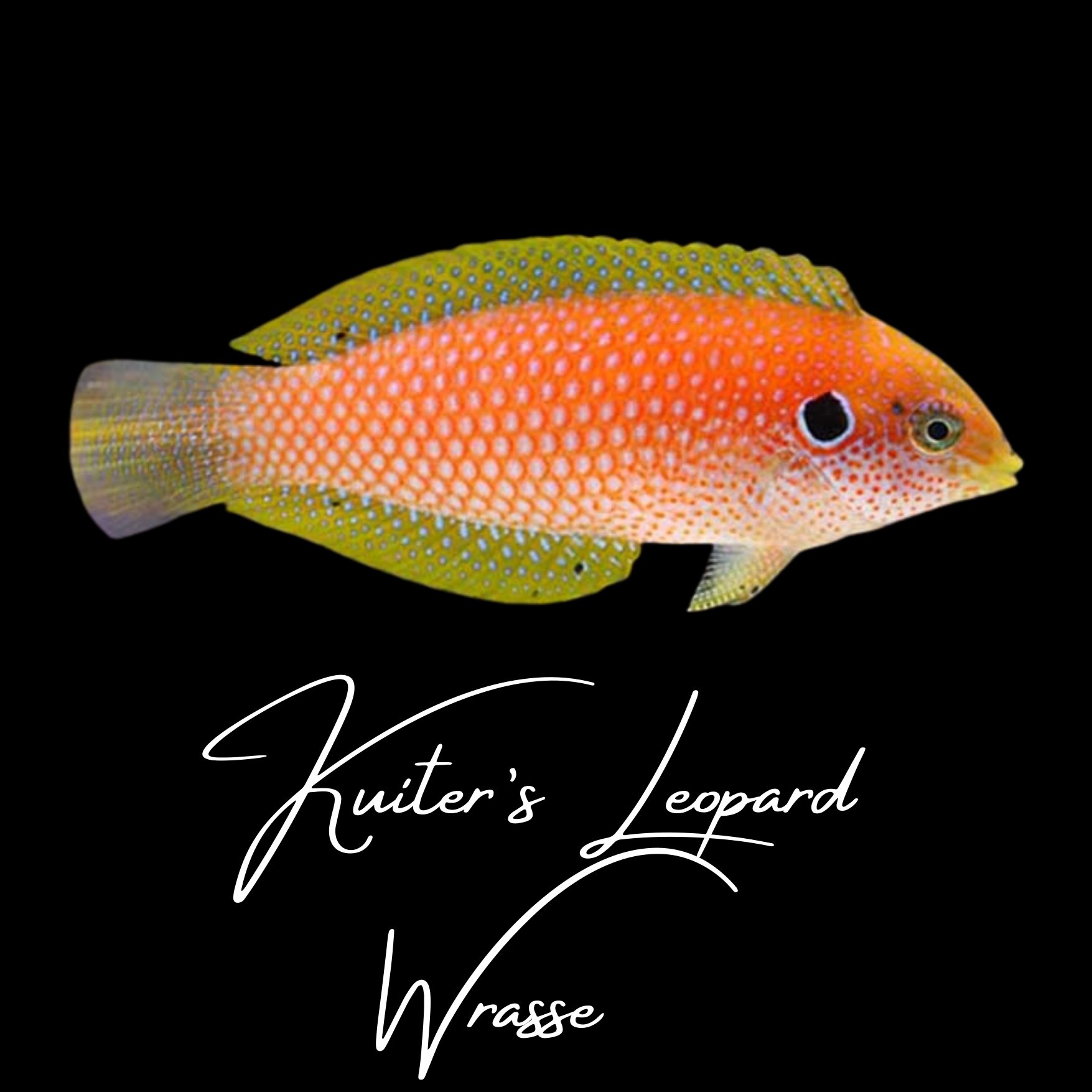
| Kuiter's Leopard | Macropharyngodon kuiteri | Unpredictable acclimation; rare, with poorly documented captive needs. | An observation-only period (2-4 weeks) in quarantine with minimal disturbance to assess health and feeding response. | A mature, ultra-peaceful reef. The patient collector willing to invest time and observation before expecting normal behavior. |
Acclimation Battle Plan
Acclimation Day:
-
Lights: OFF in display tank.
-
Acclimate: Drip acclimate for 90+ minutes into the QT/holding container.
-
Release: Gently net (or use a clear continer) and release into the sand-bottomed QT. (If you don't have the whole bottom with a sand bed at least have a tupperware filled with sand 2x the fishes body length and several inches deep, so they don't smash their noses while burying.)
-
Do not feed: Let it bury itself. It may not emerge for 24 hours. Don't stress, give them space and don't constantly check in on them.
Day 1-2: The First Contact
Evening Feeding Protocol for a Non-Feeding Wrasse
Purpose: To trigger a feeding response in a new leopard wrasse that refuses frozen foods.
Best Practice: Observe and purchase only fish already eating frozen. Use this method only as a last resort for acclimating a fish that has stopped eating.
Procedure:
-
Timing: One hour before lights out, when the fish is most likely to forage.
-
Tool: Use a pipette or turkey baster (you may cut/trim the tip for a wider opening to prevent damaging the brine shrimp).
-
Method: Gently puff a small cloud of live brine shrimp just above the sand bed near the wrasse's hiding place. The movement should trigger its instinct to strike.
-
Critical Nutritional Step: Live brine shrimp have virtually no nutritional value on their own. You must enrich them first. Soak the brine shrimp for 30-60 minutes in a marine enrichment product (e.g., Selcon, Brightwell Aquatics Amino, live phytoplankton) before feeding. Their value is what they consume immediately prior to being eaten.
-
Philosophy: Remember, live brine shrimp are a behavioral trigger, not a complete food source. Their primary role is to get the fish eating again. The goal is to use this success to wean the fish onto enriched frozen brine, mysis, and other prepared foods within a week.
Disclaimer: This is a supportive care technique, not a long-term diet. A fish sustained solely on live brine shrimp, even enriched, will eventually succumb to nutritional deficiencies.
Goal: Trigger a feeding response. Don't worry if it refuses.
Day 3-7: Building the Association
-
Morning & Evening: Continue live brine. Thaw a small amount of frozen brine and add to the live bring you are feeding. Remember the frozen brine must be enriched with spirulina or it doesn't have much nutrients. You can also mix in a small amout of mysis. Hikari has a smaller particle size and P.E. has a larger particle size depending on your wrasse's mouth gape.
-
This will have a stronger smell and might activate a feeding response
-
You want them to start associating the frozen brine/mysis shrimp as food.
-
-
Observe: Is it emerging more quickly? Is it actively hunting the brine?
Day 8-14: The Transition
-
Reduce Live: Slowly adjust the feeding mixture to 50% live brine, 50% frozen brine/mysis.
-
Introduce Pellets: Soak 3-4 pellets, and add to the frozen mixture. I find if they are softer to begin with they are more likely to accept them.
Day 15-30: The Home Stretch
-
Reduce Live: Slowly adjust the feeding mixture to 100% frozen mixture and pellets to get them to eat more often throughout the day.
Graduation Day (Week 4+):
Graduation Day (moving to your display tank) only happens if it is rushing to eat the frozen mixture. This is the only pass/fail grade. Otherwise, extend the quarantine until you know it will be successful in the long run.
The Unspoken Questions Answered
Q: My tank is already running. Can I still add one?
A: Follow the Audit in Section 1. If you don't answer Yes to all of those questions it is much harder to have one successfully. Can you add a 3" sand bed without an avalanche? Can you add or expand a refugium? Retrofitting is harder than building from scratch.
Q: Mine just hides all the time. Is it dying?
A: Not necessarily. It's stressed. Ensure no tankmate is bullying it (watch at night with a red light). Dim the main lights for a week. Double down on target-feeding live food right at its burrow. Patience is a weapon.
Q: What's the one thing I wish everything knew?
A: That the sand bed is a living organ of the tank. You don't vacuum it like a floor. You gently stir the top layer to prevent compaction, but you leave the deep layers untouched as a microbial and microfaunal reservoir. Treat it with the same care as your filter.
Conclusion:
It is a difficult, often humbling path. But for those who listen, who observe, and who build with intention, the reward is unparalleled. You don't just have a pet. You have a living, thriving testament to your skill—a spotted jewel, gliding confidently through a world you built just for it.
Now you know what it takes. The only question left is: are you ready?
Happy Reefing!
References:
-
Michael, Scott W. Reef Aquarium Fishes: 500+ Essential-to-Know Species. Microcosm/T.F.H. Publications, 2008.
-
Moe, Martin A. The Marine Aquarium Handbook: Beginner to Breeder. 3rd ed., Green Turtle Publications, 2014.
-
Fenner, Robert M. The Conscientious Marine Aquarist: A Commonsense Handbook for Successful Saltwater Hobbyists. Microcosm/T.F.H. Publications, 2008.
-
Dakin, Nick. The Macmillan Book of the Marine Aquarium. Macmillan Publishing Company, 1992.
-
Sprung, Julian, and Charles Delbeek. The Reef Aquarium: Science, Art, and Technology. Vol. 3. Ricordea Publishing, 2023.


