


The Fairy Wrasse Guide: Selecting, Keeping, and Thriving
The Fairy Wrasse Guide: Selecting, Keeping, and Thriving
As a reminder, I write these articles for fun and to help people learn and avoid the mistakes I made. If I missed something (I am certainly not perfect) let me know and I can add it to the article.
-Tamara
Introduction
There’s a moment in every reefkeeper’s journey when they see a fairy wrasse for the first time. It’s not just a fish; it’s a living flash of bright beautiful color! The way it darts, a blur of electric blue and sunset orange, before hovering with curious, bird-like glances—it captivates completely. As a marine scientist, my mission is to help you capture a slice of that magic in a way that’s ethical and successful.
Fairy wrasses (genus Cirrhilabrus) are often hailed as the perfect reef fish: stunningly colorful, peaceful, and considered reef-safe. But "peaceful" doesn't mean simple. Their care is a nuanced dance between providing the right environment, understanding their social quirks, and making informed species selections. This guide is designed to walk you through that process, whether you're a beginner mesmerized by their beauty or an advanced hobbyist looking to fine-tune your approach. Let's dive into the world of these exquisite fish.
Why Fairy Wrasses Captivate Us
Before we talk logistics, let’s acknowledge why we’re all here. Fairy wrasses hold a special place for good reason:
1. Unmatched Color and Variety:
No other marine fish group offers such a wide, vibrant palette in such a manageable package. From the fiery "Flame" to the intricate "Scott's," there's a color pattern for every taste. Males display the most intense colors, often changing hues during courtship or when asserting dominance—a breathtaking display.
2. Reef-Safe Credentials:
This is their biggest selling point. Fairy wrasses lack the teeth and inclination to nip at corals, clams, or most invertebrates. They are true plankton-pickers, focused on tiny foods in the water column.
3. Active and Engaging Personalities:
They are almost constantly in motion, flitting through the water column, investigating rockwork, and providing a dynamic, lively presence that brings a tank to life.
4. Generally Peaceful Demeanor:
They coexist well with a wide range of other community fish, making them excellent additions to mixed reef tanks.
5. A Rewarding Challenge:
While many species are hardy, their success hinges on subtle details—acclimation, diet, and tankmate selection. Mastering these details is deeply satisfying.
Selecting Your Fairy Wrasse: A Species Breakdown
Not all fairy wrasses are created equal. Some are bulletproof beginner fish, while others are delicate gems for the expert. Making the right choice from the start is 90% of the battle.
The Science Behind the Challenge: Why Collection Depth Matters
A key factor in a fairy wrasse's hardiness is where it comes from. Species collected from deeper waters (below ~80 feet) undergo significant barotrauma—physical stress from rapid pressure changes during ascent. Their swim bladders can over-expand, and their entire physiology is adapted to stable, cold, dark conditions. Acclimating them to our bright, warm, shallow aquarium environments is a massive shock to their system. Shallow-water species, in contrast, experience milder pressure changes and are adapted to more variable conditions, making them far more resilient from day one.
A Detailed Look at the Species:
This is by no means an exhaustive list, but I selected the ones most common in the hobby as well as a few of my favorites. ALSO, most of these images are of the males in fully mature colors. Females are typically quite muted or even have different coloration all together.
For Beginners: The Forgiving & Vibrant
These species are typically collected from shallower waters, adapt quickly to captivity, and accept prepared foods readily.
1. McCosker’s Flasher Wrasse (Paracheilinus mccoskeri)
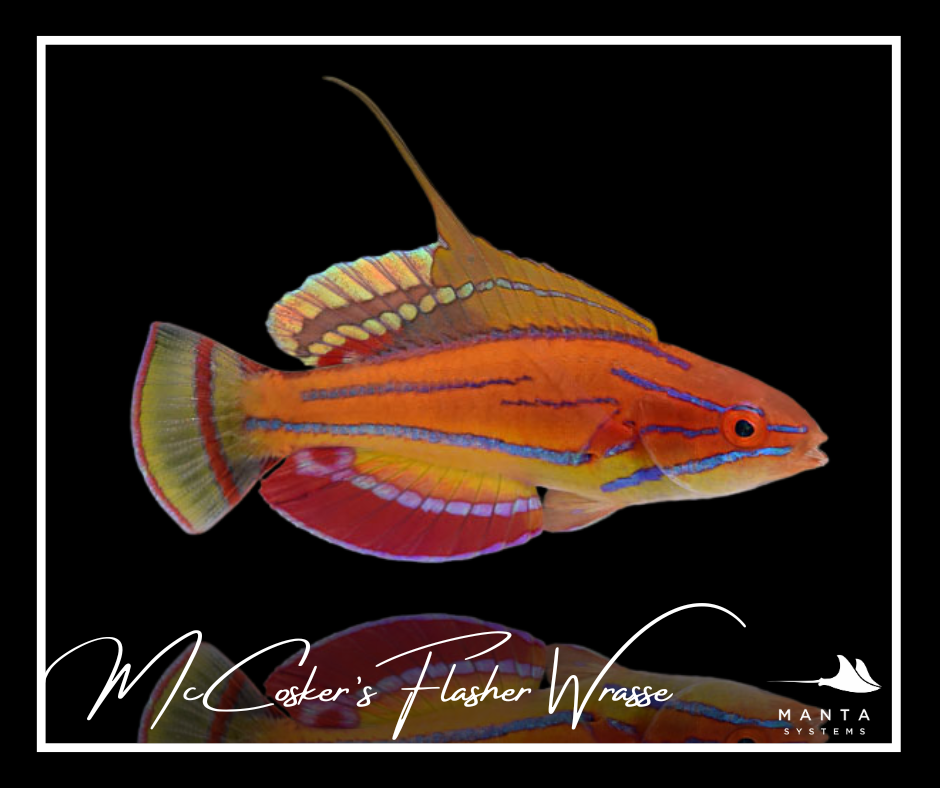
Photo Credit: LiveAquaria
-
-
Why they're great: While technically a flasher wrasse (closely related), it’s the perfect gateway fish. Small, stunning, and relatively inexpensive. Males perform dazzling "flashing" displays.
-
Care Notes: Minimum 30 gallons. Keep one male with 2-3 females for best behavior. Peaceful but can be shy with boisterous tankmates.
-
2. Carpenter's Flasher Wrasse (Paracheilinus carpenteri)
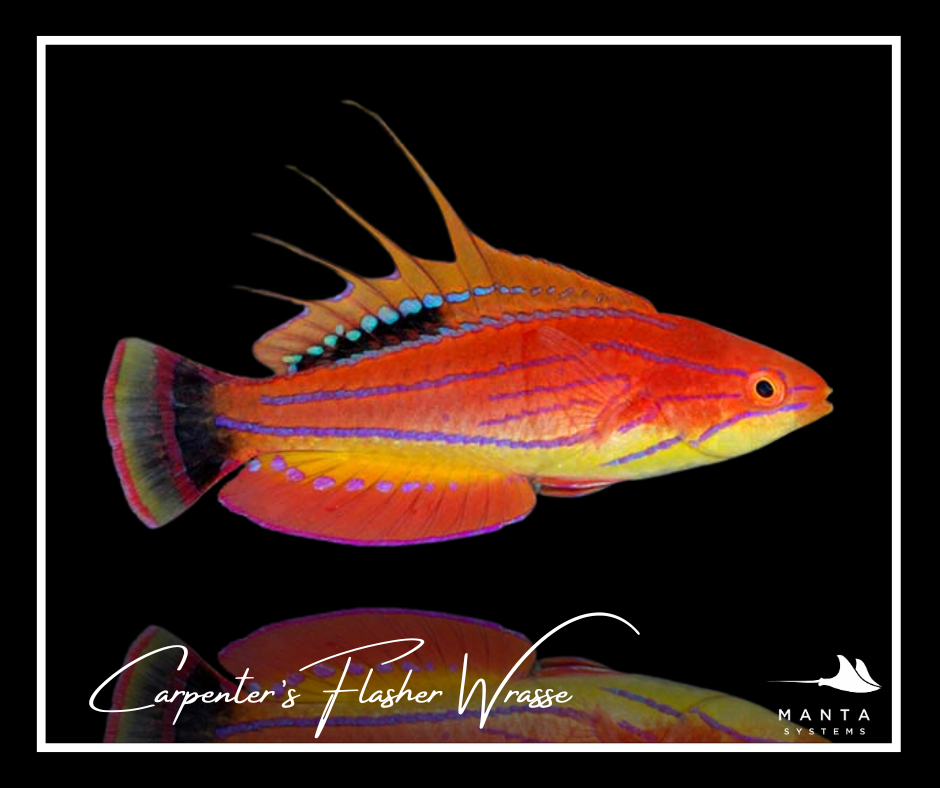
Photo Credit: LiveAquaria
-
-
Why they're great: Similar to McCosker’s but often with more intense blue and red markings. Exceptionally peaceful and an eager eater.
-
Care Notes: Same as McCosker’s. These two flasher species are among the best "first wrasses" you can buy.
-
3. Lubbock’s Fairy Wrasse (Cirrhilabrus lubbocki)
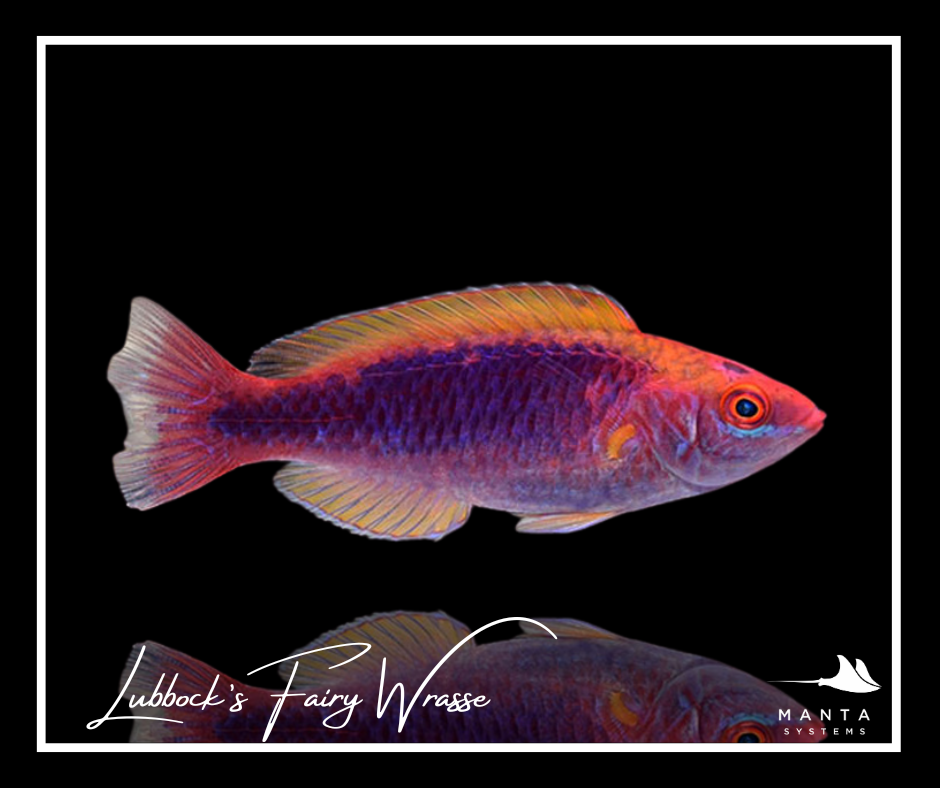
Photo Credit: LiveAquaria
-
-
Why they're great: A smaller, often more affordable true fairy wrasse. Hardy, adaptable, and less prone to jumping than some relatives.
-
Care Notes: Minimum 40 gallons. A great choice for a smaller system where you want fairy wrasse color without the larger size.
-
4. Exquisite Fairy Wrasse (Cirrhilabrus exquisitus)
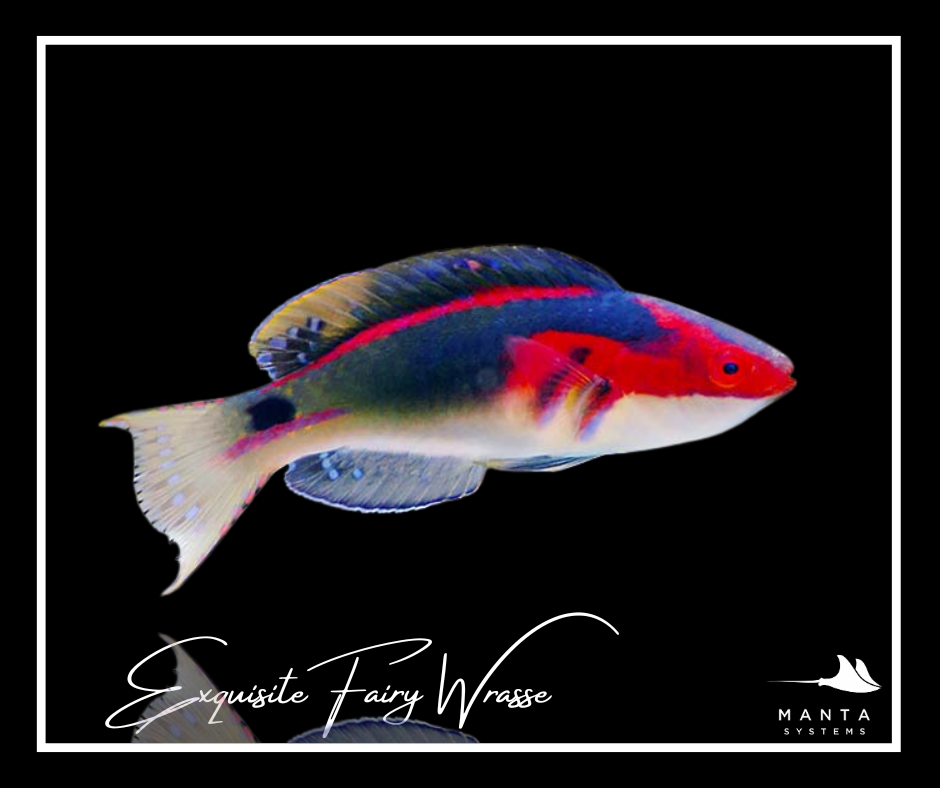
Photo Credit: LiveAquaria
-
-
Why they're great: Lives up to its name. A common, hardy species that shows amazing color shifts under different lighting.
-
Care Notes: Minimum 55 gallons. Can be slightly more territorial than the flashers. Provide plenty of swimming room.
-
5. Red Velvet Fairy Wrasse (Cirrhilabrus rubrisquamis)
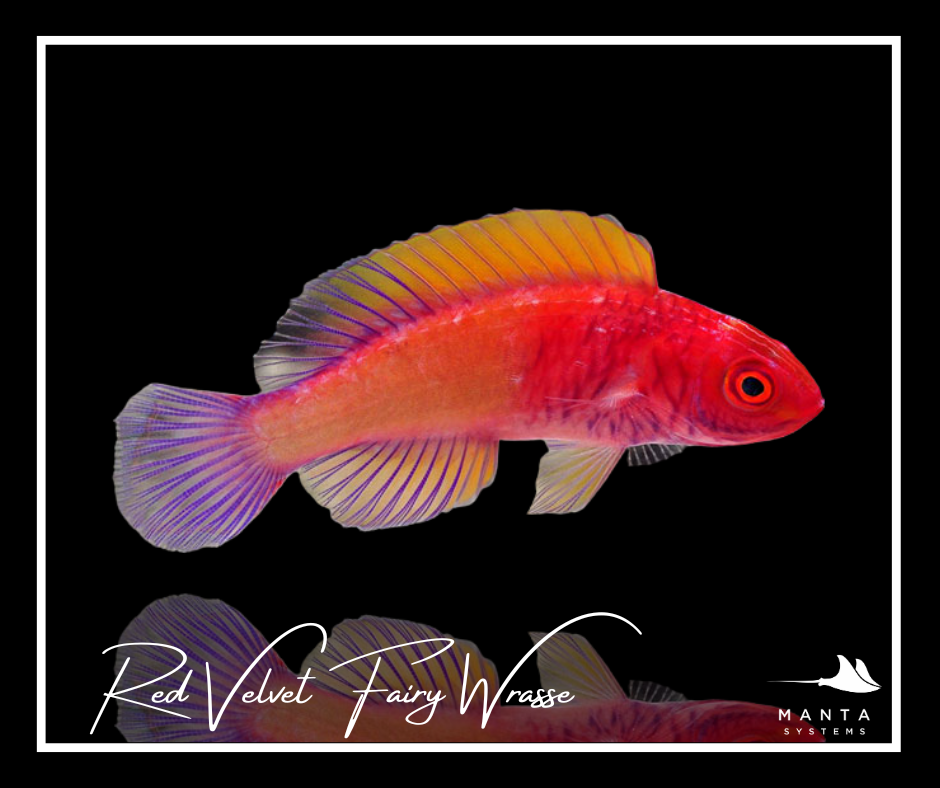
Photo Credit: LiveAquaria
-
-
Why they're great: A staple for adding vibrant red/pink color without the Lineatus price tag. Hardy, active, and an enthusiastic feeder that brings a warm, solid splash of color to the tank.
-
Care Notes: Minimum 55 gallons. Very peaceful but can be overshadowed by very bold, aggressive feeders. Ensure it gets its share during meal times in a community setting.
-
6. Filamented Flasher Wrasse (Paracheilinus filamentosus)

Photo Credit: Australian Museum
-
-
Why they're great: For the beginner ready for a "wow" factor. The male's long, trailing dorsal filaments make its courtship display one of the most breathtaking in the hobby.
-
Care Notes: Minimum 55 gallons. Requires a bit more peaceful stability than McCosker's. Needs open space for its dramatic flashing displays and should be kept with similarly tranquil tankmates.
-
For Intermediate Hobbyists: The Stunning Showpieces
These require more stable systems, careful acclimation, and consideration of tankmate dynamics.
1. Scott’s Fairy Wrasse (Cirrhilabrus scottorum)
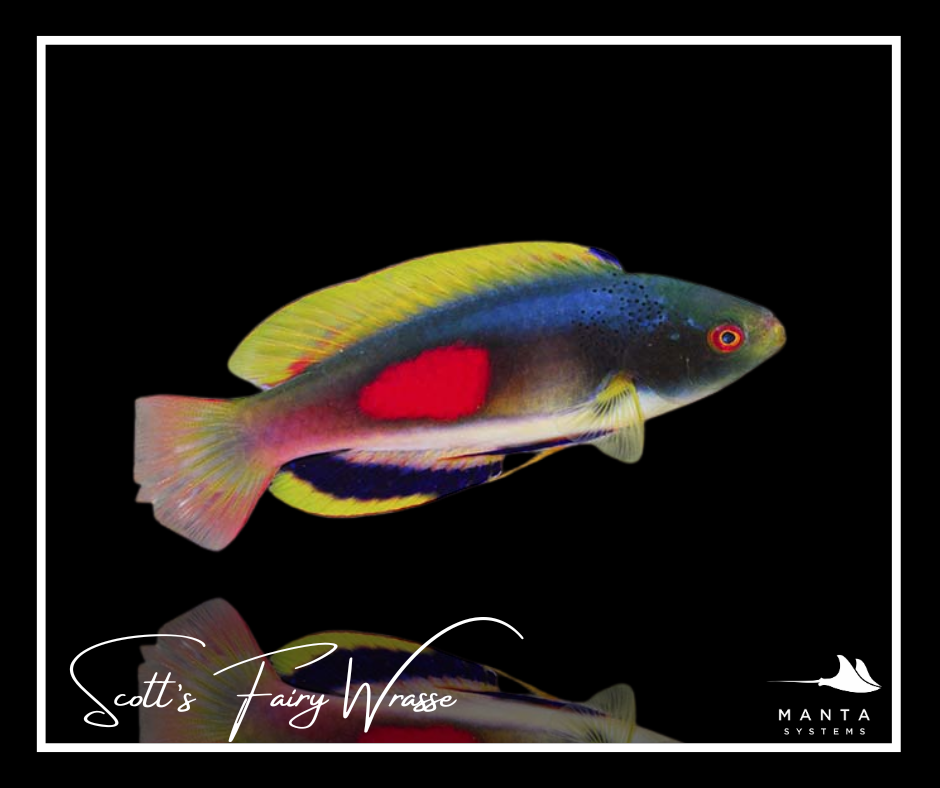
Photo Credit: LiveAquaria
-
-
Why they're great: Perhaps the most iconic fairy wrasse, with its purple, yellow, and blue-green body. A peaceful but assertive tank resident.
-
Care Notes: Minimum 75 gallons. Can be outcompeted for food by very aggressive feeders. Ensure it gets its share during feeding.
-
2. Lineatus Fairy Wrasse (Cirrhilabrus lineatus)
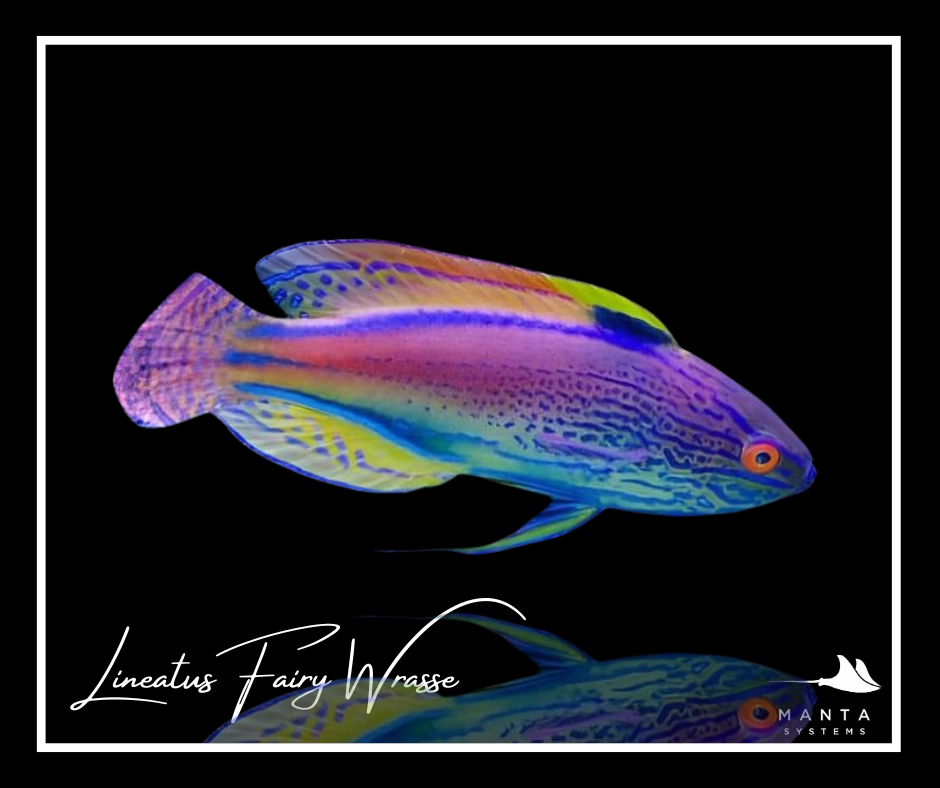
Photo Credit: AJ Aquatics
-
-
Why they're great: Known for its deep red body and striking horizontal lines. A larger, more robust fairy wrasse.
-
Care Notes: Minimum 75 gallons. One of the hardier "premium" species, but still demands excellent water quality. Can be territorial towards similar-looking wrasses.
-
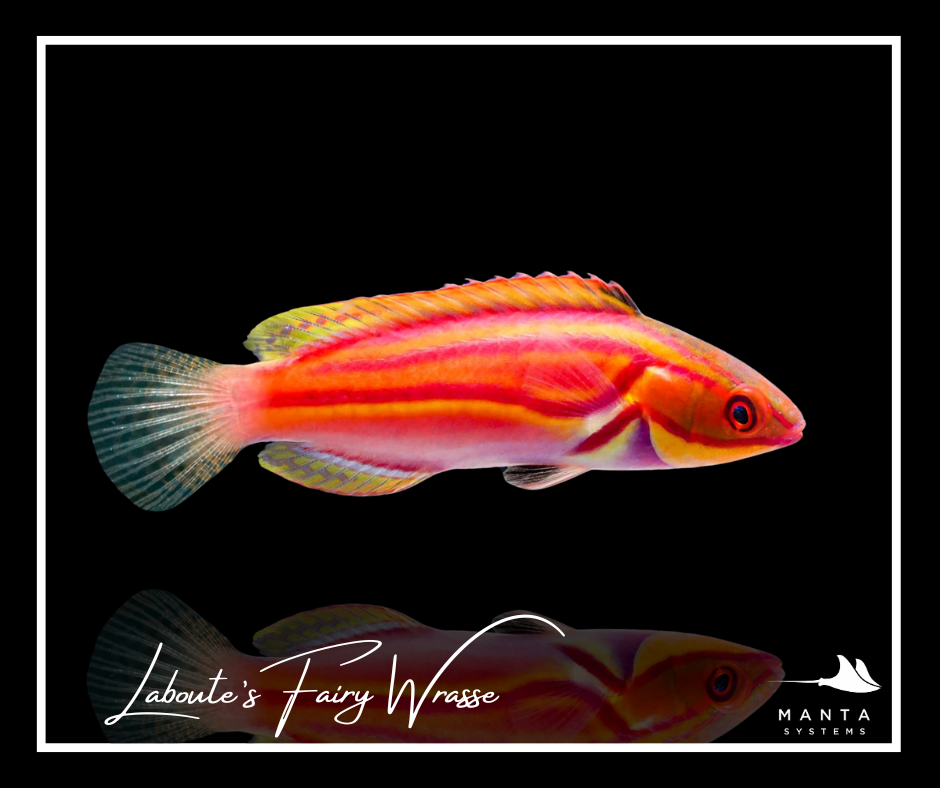
3. Laboute's Fairy Wrasse (Cirrhilabrus laboutei)
-
-
Why they're great: Features a mesmerizing pattern of fine lines and spots. Less common and highly sought after.
-
Care Notes: Minimum 75 gallons. Can be shy initially. Benefits from a calm tank environment and a mature tank with natural microfauna to graze on.
-
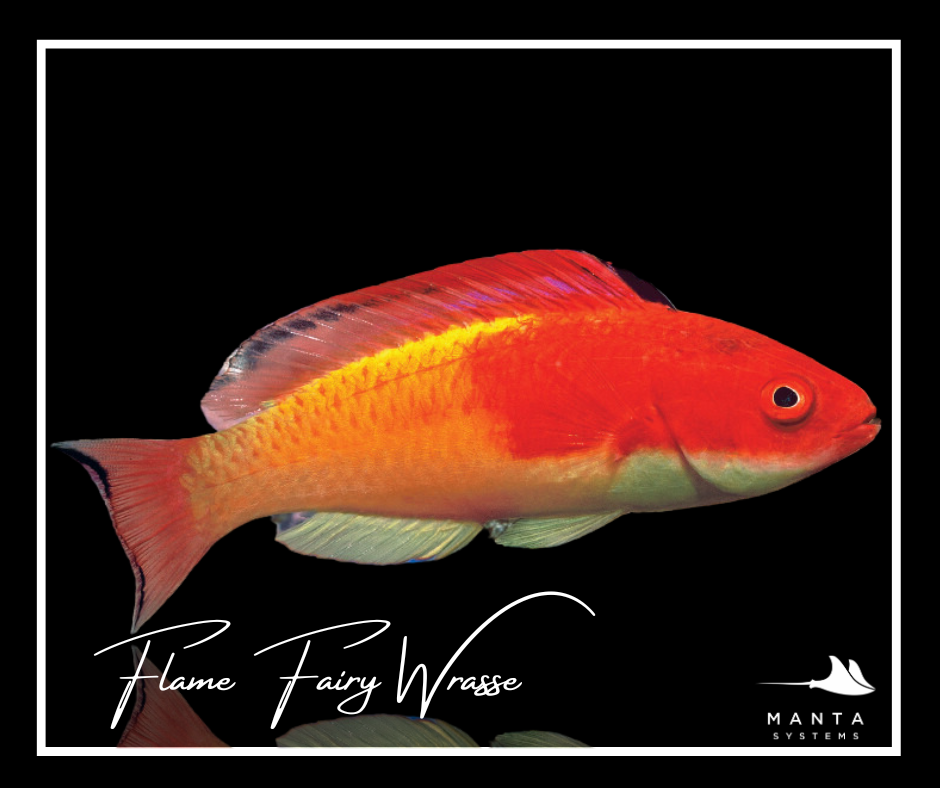
4. Flame Fairy Wrasse (Cirrhilabrus jordani)
-
-
Why they're great: A long-time favorite with an incredible flame-orange body and brilliant blue accents on the fins and face. An active and unmistakably beautiful fish.
-
Care Notes: Minimum 75 gallons. Can be surprisingly territorial for a fairy wrasse and is not always a good "community" specimen. Best kept as the only wrasse of its type or in a very large tank.It can be paired with male and female but it is a delicate balance to get an "accepted" pairing.
-
5. Solar Fairy Wrasse (Cirrhilabrus solorensis)

Photo Credit: LiveAquaria
-
-
Why they're great: Very common and affordable, with a striking, high-contrast pattern of purple, yellow, and black. It's a bold, always-visible fish that provides great value.
-
Care Notes: Minimum 75 gallons. Known to be one of the most aggressive commonly-available fairy wrasses. Can harass peaceful tankmates and should often be kept as a single specimen of its kind.
-
For Advanced Aquarists: The Deepwater Gems
These are often the most breathtakingly beautiful but come with significant challenges. They are for experienced keepers with mature, stable, and peaceful systems.
The Science Behind Their Delicacy:
Beyond barotrauma, deepwater fairy wrasses often have slower metabolisms adapted to cooler, nutrient-sparse waters. Our warm, nutrient-rich tanks can overwhelm their systems. Furthermore, their eyes are adapted to the blue-spectrum light of deep water; intense white aquarium lighting can be physically stressful and cause them to hide incessantly.
1. Earl's Fairy Wrasse (Cirrhilabrus earlei)
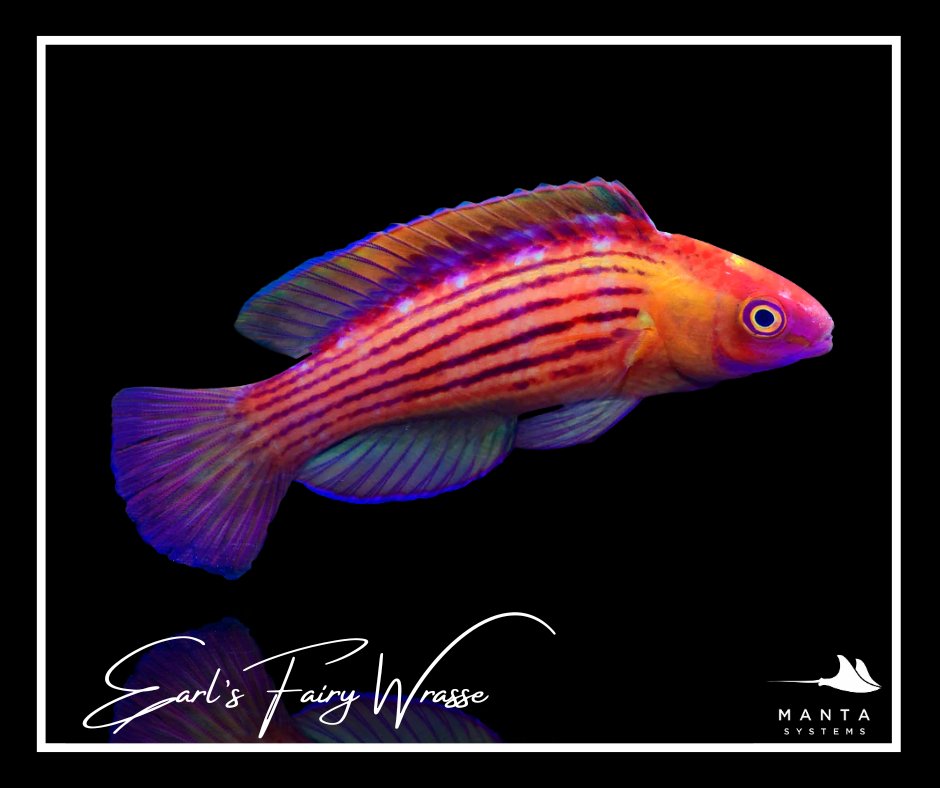
Photo Credit: Reef Solution
-
-
Why they're great: A recent discovery with an unbelievable mix of colors. A deepwater species that commands a high price.
-
Care Notes: Minimum 100 gallons. Extremely sensitive to pressure changes and stress. Requires a dedicated quarantine with dim lighting, minimal flow, and expert-level weaning onto foods. Not for beginners.
-
2. Rhomboid Golden Fairy Wrasse (Cirrhilabrus rhomboidalis)

-
-
Why they're great: Long considered one of the most beautiful. Slightly more adaptable than Earl’s but still a delicate, expensive fish.
-
Care Notes: Minimum 75 gallons. Needs a very peaceful tank. Often does best when introduced as a juvenile.
-
3. Pintail Fairy Wrasse (Cirrhilabrus lanceolatus)
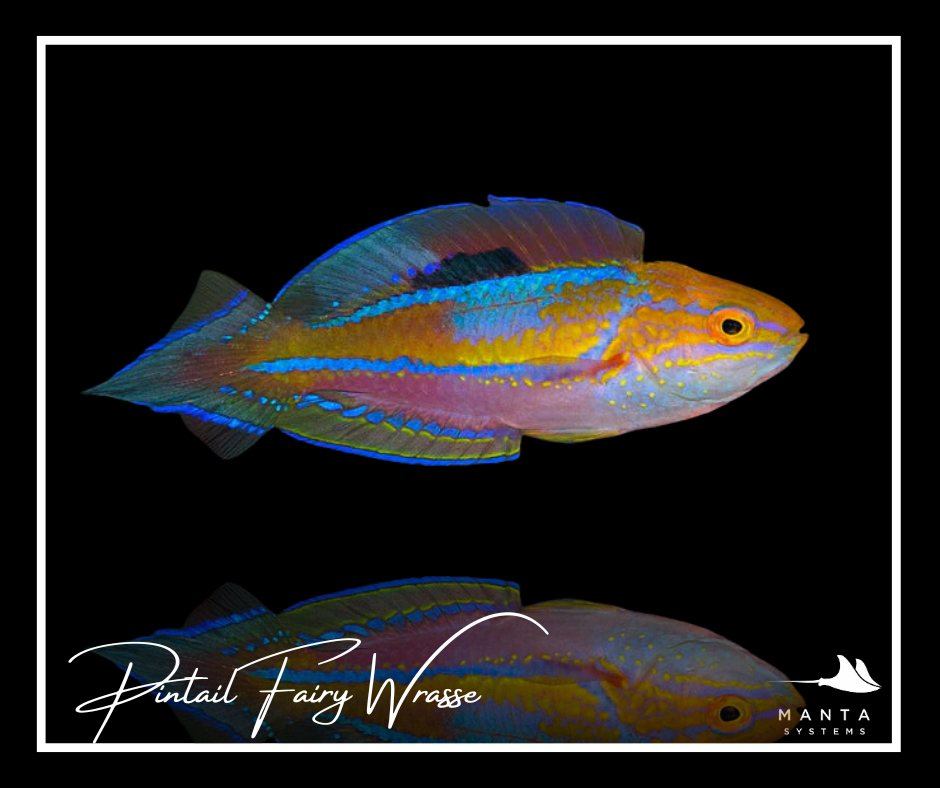
Photo Credit: Violet Aquarium
-
-
Why they're great: Known for its elongated central tail fin. Another deepwater specialist with specific needs.
-
Care Notes: Minimum 75 gallons. Shy and easily outcompeted. Must be housed with the most docile tankmates and fed frequently.
-
4. Hooded Fairy Wrasse (Cirrhilabrus bathyphilus)
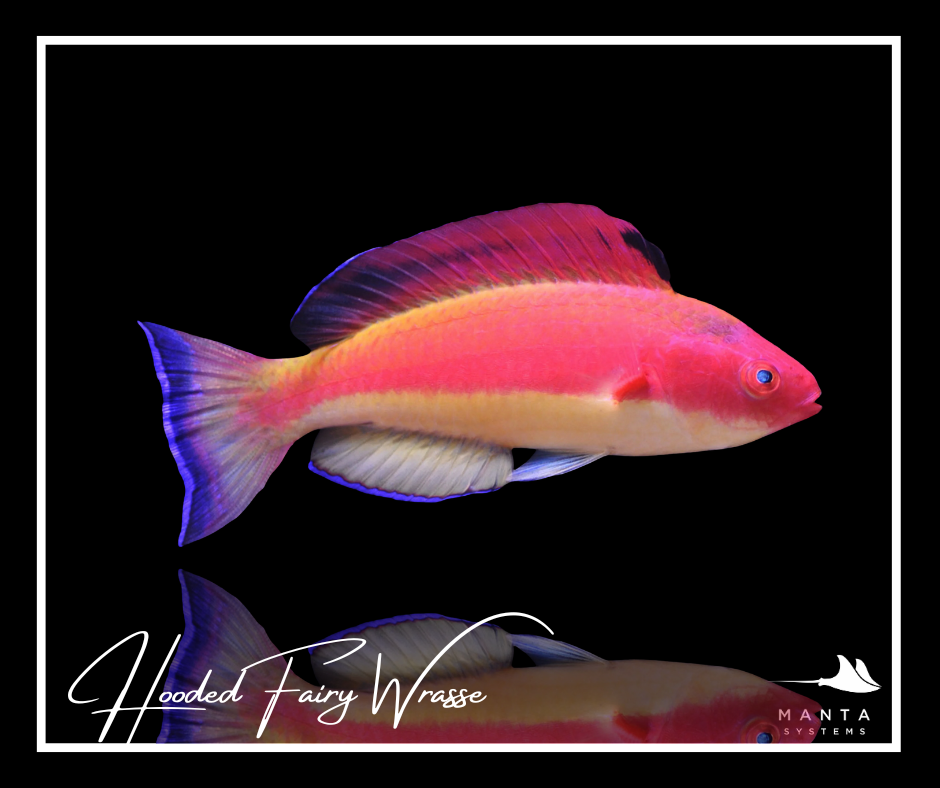
Photo Credit: World Wide Corals
-
-
Why they're great:An increasingly available deepwater species with a stunning contrast of a yellow body and a deep purple "hood" over the head and forebody.
-
Care Notes: Minimum 75 gallons. Represents the deepwater challenge at a slightly more accessible tier. Requires dim lighting, a long, patient acclimation in quarantine, and a tank free of bullies.
-
The "Before You Buy" Checklist for Advanced Fairy Wrasses:
Ask yourself these questions before purchasing an Earl's, Rhomboid, or similar deepwater gem:
-
Tank Stability: Is my display tank over 1 year old, with zero parameter swings (Alk, Ca, Mg, Temp) for the last 3 months?
-
Quarantine Ready: Do I have a separate, established QT tank where I can control lighting (dim/blue) and flow (low) for 6-8 weeks?
-
Food Protocol: Am I prepared to culture or purchase live baby brine shrimp, copepods, and tediously wean onto frozen foods over several weeks?
-
Tankmate Audit: Is my display tank populated only by peaceful, non-competitive fish (e.g., small gobies, other docile wrasses)?
-
Mindset: Am I financially and emotionally prepared for a high likelihood of failure despite my best efforts? These are wild animals with extreme acclimation challenges.
If you answered "no" to any, admire it at the store or in a public aquarium. Success requires every item to be checked.
Fairy Wrasse Comparison Chart
This table provides an at-a-glance overview to help with quick comparison and decision-making.
Finding a Healthy Specimen: The Questions to Ask
Your success starts at the store. Don't be shy—a reputable retailer will appreciate informed customers. Use this script:
-
"When did this fish arrive?" The ideal answer is "Over 10 days ago." This means it's past the initial critical mortality period and has had time to start acclimating.
-
"Can you feed it for me, please? I'd like to see it eat." Politely insist. You want to see it actively chase and consume frozen mysis or brine shrimp from the water column. Accepting food is the single best indicator of a fish that has settled in. If they will only accept live brine it might not adapt long term.
-
"Has it been treated with any medications in your system, or have you observed any signs of disease?" This tells you about their husbandry and gives you a health baseline for your own quarantine.
-
"Do you offer any short-term health guarantee?" Many high-end stores offer a 24-48 hour or even 7-day guarantee. This provides a small safety net, though the ultimate responsibility is yours.
Walk away if: The staff won't feed the fish frozen food, the staff can't answer the questions above, the fish hides relentlessly and ignores food, or it has visible white spots, ragged fins, or labored breathing.
Tank Setup & Requirements: Building a Fairy Wrasse Paradise
Getting the environment right is non-negotiable. These are active, intelligent fish that need specific conditions to display their full beauty and behavior.
1. Tank Size & Layout:
-
Minimum Size: A 30-gallon tank can house a single flasher wrasse or a very small fairy wrasse. However, a 55-75 gallon tank is the true starting point for most fairy wrasses, providing the swimming space and stability they need.
-
Why Larger is Better: More volume means more stable water parameters and less chance of territorial aggression. It also allows for the social groups (one male, multiple females) that encourage natural behavior.
-
Aquascape: Create a balance. They need open swimming space in the middle and upper water column to cruise and display. Equally important is complex rockwork with numerous nooks, crannies, and, most critically, overhangs near the top of the tank. This provides security and essential sleeping quarters.
2. The Non-Negotiable Lid:
-
This is the most important piece of equipment. All wrasses are expert jumpers. A startled fairy wrasse can and will find the tiniest gap. Use a professionally fitted mesh lid (like the DIY kits from BRS or Red Sea) or a tight-fitting glass/acrylic canopy. No exceptions.
3. Water Quality & Parameters:
Fairy wrasses thrive in pristine, stable reef conditions.
* Temperature: 76-78°F
* Salinity: 1.024-1.026
* pH: 8.1-8.4
* Alkalinity: 8-11 dKH
* Nitrate: <10 ppm (They are sensitive to poor water quality; elevated nitrates can cause color loss and stress.)
* Phosphate: <0.05 ppm
* Ammonia/Nitrite: 0 ppm
4. Flow & Filtration:
-
They enjoy moderate to strong, turbulent flow that mimics reef currents—it keeps them active and helps deliver their planktonic food.
-
Excellent mechanical and biological filtration is key. A quality protein skimmer is highly recommended to maintain the low-nutrient environment they prefer.
5. Lighting:
-
Standard reef lighting is perfect for shallow-water species. Their colors will pop under full-spectrum LEDs.
-
For deepwater species, lighting must be adjustable: start with only blue spectrum and very low intensity, gradually increasing over weeks. Ensure there is a proper dawn/dusk ramp period for all species to avoid startling them. They need a safe, dim spot to "bed down" for the night.
Social Dynamics & Tankmates: Keeping the Peace
The Science of Social Structure: Protogyny
Most fairy wrasses are protogynous hermaphrodites. This means all individuals start life as females. In a group, the most dominant, usually largest, female will undergo a hormonal and physiological change to become a male. This is why the "harem" model (1 male, multiple females) works so well—it mirrors their natural social organization. If the male is removed, the dominant female will typically transform to replace him.
Intraspecies Behavior (Keeping Multiple Wrasses):
-
The Harem Model: The ideal setup is one male of a species with 3-6 females. This spreads out any amorous or aggressive attention from the male and looks spectacular.
-
Multiple Species: You can keep multiple fairy/flasher wrasse species in a large enough tank (125+ gallons). The key is to:
-
Add them simultaneously if possible.
-
Choose species with different color patterns and body shapes (e.g., a Cirrhilabrus and a Paracheilinus).
-
Ensure the tank has multiple distinct "zones" and visual breaks in the rockwork.
-
-
Male-on-Male Aggression: Two males of the same or very similar species will almost always fight, often to the death.
Ideal Tankmates:
-
Peaceful community fish: Clownfish, gobies, blennies, dartfish, most tangs (in appropriate-sized tanks), and other non-aggressive wrasses like leopard wrasses.
-
Invertebrates: Perfectly safe with shrimp, crabs, and snails.
Tankmates to Avoid:
-
Aggressive Feeders: Large angelfish, triggerfish, puffers, and some dottybacks will outcompete shy wrasses for food and may bully them.
-
Predatory Fish: Lionfish, groupers, and large eels see fairy wrasses as a snack.
-
Other Boisterous Wrasses: Six-line wrasses, while small, can be notoriously nasty towards new, peaceful wrasses. Large bird wrasses or tuskfish are also a danger.
-
Mixing similar-looking species increases aggression.
Quarantine, Acclimation & Health: A Proactive Approach
The Mandatory Quarantine (QT):
Skipping QT is the #1 reason for disaster. Fairy wrasses, especially new imports, can carry parasites like Marine Ich (Cryptocaryon) and Velvet (Amyloodinium). A proper 4-6 week observation period in a separate, bare-bottom tank is essential.
-
QT Setup: Simple tank, tight lid, with a piece of PVC for hiding, a heater, and a filter. For deepwater species, use a dim light or cover the tank sides.
-
Observation & Protocol: Watch for flashing, rapid breathing, or spots. A standard 30-day QT might look like:
-
Observe for 7 days →
-
Treat with Praziquantel (e.g., PraziPro) for 5-7 days to address internal worms →
-
Observe for 14+ more days for signs of external parasites. For known risks, a prophylactic copper or chloroquine treatment may be considered (with extreme caution).
-
Deepwater species may be more sensitive to copper and should be dosed cautiously or considered for alternative treatments like chloroquine.
Proper Acclimation:
-
Temperature Acclimate: Float the bag in the QT tank for 15-20 minutes.
-
Drip Acclimate: Use airline tubing to slowly drip QT tank water into the bag/bucket over 60-90 minutes. This slowly adjusts them to your water parameters.
-
Net and Release: Never pour store water into your tank. Gently net or use a fish scooper to remove the fish and place it into the QT.
-
Keep it Dark: Keep lights off in the QT for the first 24 hours to minimize stress.
Common Health Issues:
1. Jumping: Prevented by a lid.
Every fairy wrasse, without exception, is a jumper. Even tiny gaps can be fatal. If you don’t have a tight-fitting lid, don’t buy a fairy wrasse yet. It’s not optional—it’s survival.
2. Stress & Refusal to Eat: Caused by poor acclimation, bullying, or incorrect environment. Ensure proper hiding spots and peaceful tankmates.
3. Parasites (Ich/Velvet): Treat in QT. Fairy wrasses generally tolerate copper well if it's dosed accurately and the concentration is raised gradually.
4. "Wasting" (Skinny Disease): Often caused by internal parasites or simply not getting enough food in a competitive tank. The PraziPro treatment in QT is crucial. Ensure target feeding with high-quality foods.
Feeding for Vibrant Color & Health
In the wild, fairy wrasses are continuous micropredators. We must replicate this in captivity.
-
Diet: Offer a varied mix of small, meaty foods. Their favorites include:
-
Frozen: Mysis shrimp, brine shrimp (enriched), cyclopeeze, lobster/rotifer eggs.
-
Pellet/Flake: High-quality small pellets (e.g., TDO Chroma BOOST) and flakes.
-
-
Frequency: Feed small amounts 2-3 times per day. This mimics their natural grazing behavior, keeps their metabolism high, and reduces aggression.
-
Enrichment: Soak foods in vitamin supplements like Selcon to boost immunity and enhance color.
Troubleshooting Common Fairy Wrasse Problems
1. Problem: New fish is hiding and won't eat.
-
Cause: Stress from transport, bullying, or an open environment.
-
Solution: Ensure the tank has adequate hiding spots. Dim the lights for a few days. Try target feeding live or frozen brine shrimp right near its hiding place with a turkey baster.
2. Problem: Fish was eating, now it's not.
-
Cause 1: Bullying from a tankmate.
-
Solution: Use a feeding station or acclimation box to ensure it gets food. Rehome the bully if necessary.
-
-
Cause 2: Onset of disease.
-
Solution: Move to QT immediately for observation and treatment.
-
3. Problem: Colors look faded/dull.
-
Cause: Usually stress, poor nutrition, or suboptimal water quality (especially high nitrates).
-
Solution: Test water parameters. Improve diet variety and enrichment. Assess tankmate aggression.
4. Problem: Constant chasing in a group.
-
Cause: Incorrect male-to-female ratio (usually not enough females) or insufficient space.
-
Solution: For a single male, add more females. In a larger tank, rearrange rockwork to break up sight lines and territories.
Conclusion: Is a Fairy Wrasse Right for You?
Adding a fairy wrasse is about more than just buying a colorful fish. It's a commitment to providing a specific environment. Before you take the plunge, ask yourself:
-
Do I have a tightly fitted lid?
-
Is my tank mature (6+ months old) and stable, with excellent water quality?
-
Am I prepared to feed multiple times a day?
-
Do I have a peaceful community tank, free of aggressive bullies?
-
Am I willing to set up a proper quarantine system?
If you answered "yes," then you are ready for one of the most rewarding experiences in reefkeeping. Start with a hardy flasher wrasse, master its care, and you'll unlock the door to keeping some of the ocean's most breathtaking living jewels. Use the comparison chart, ask the right questions at the store, and be brutally honest about your readiness for advanced species. The flash of color, the darting movement, the serene hover—it’s a piece of the reef’s magic, brought home through knowledge and preparation.
Happy Reefing!
References:
1. Delbeek, J. Charles, and Julian Sprung. The Reef Aquarium: Science, Art, and Technology. Volume 3. Ricordea Publishing, 2005.
2. Fenner, Robert M. The Conscientious Marine Aquarist: A Commonsense Handbook for Successful Saltwater Hobbyists. Microcosm/T.F.H. Publications, 2008.
3. Kuiter, Rudie H., and Helmut Debelius. World Atlas of Marine Fishes. IKAN-Unterwasserarchiv, 2006.
4. Michael, Scott W. Reef Fishes: A Guide to Their Identification, Behavior, and Captive Care. Volume 1. Microcosm/T.F.H. Publications, 2001.


